Best 18000 and 24000 BTU Mini Splits: Top 10 Picks (November 2026)
The best 18,000 and 24,000 BTU mini splits include the Pioneer Diamante Pro 18000 BTU 230V for finished additions, the Cooper & Hunter 18000 BTU 230V for connected home offices, and the Cooper & Hunter 24000 BTU 230V for large open rooms.
On this page (8 sections)
- Which 18,000 and 24,000 BTU mini splits belong on your shortlist?
- The best mini splits for large rooms, additions and garages
- How do you size a 24,000 BTU mini split correctly?
- Which efficiency and winter figures should drive your choice?
- What must be ready before the mini split arrives?
- Should you choose DIY connections or professional installation?
- How do you keep comfort steady after installation?
- Which 18,000 or 24,000 BTU mini split should you choose?
Choose a 24,000 BTU mini split when your room's heating and cooling loads justify it; the Cooper & Hunter MIA is a straightforward option with included app control. If the room needs less capacity, the Pioneer Diamante Pro 18000 BTU 230V leads this group.
The right system must match both the room and the installation route. A larger compressor cannot make air travel through closed doors, fix poor insulation or replace proper drainage.
Start with our mini split size guide. For specific spaces, compare the garage mini split guide and our 9,000 and 12,000 BTU mini split roundup.
Our picks at a glance
-
1

-
2

-
3
- 4
 Check it
MRCOOL Easy Pro 18000 BTU 230V
Best for smaller DIY projects - 5
 Check it
Cooper & Hunter 24000 BTU 230V Heat Pump
Best for colder winter regions - 6
 Check it
Pioneer Quantum Ultra 24000 BTU 230V
Best for custom connection routes - 7
 Best for DIY garage upgradesCheck it
- 8
 Check it
MRCOOL DIY Select 18000 BTU 230V
Best for quiet bedroom projects - 9Check it
MRCOOL DIY Select 24000 BTU 230V
Best for larger DIY additions - 10
 Check it
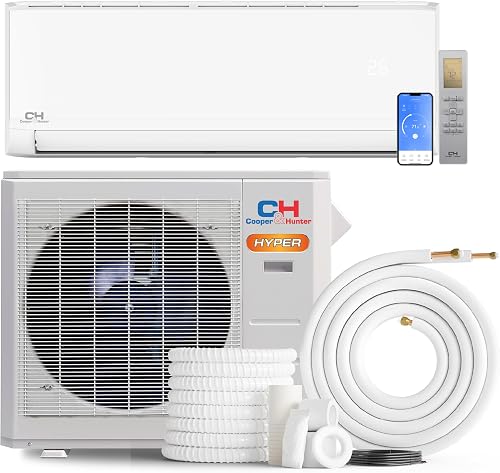
Cooper & Hunter 24000 BTU Hyper Heat
Best for severe winter climates
Which 18,000 and 24,000 BTU mini splits belong on your shortlist?
Shortlist by capacity first, installation method second and climate third. Pioneer leads for a smaller finished zone, while the larger Cooper & Hunter MIA offers a clear starting point for buyers who need contractor-installed capacity and app access.
We compared efficiency, heating operating limits, connection methods and included controls. The scores reflect overall fit across those needs; a lower-ranked specialist can still be the better choice for a cold climate or DIY project.
| Product | Best for | Capacity | Efficiency | Installation | Our score |
|---|---|---|---|---|---|
| Pioneer Diamante Pro 18000 BTU 230V | finished additions | 18,000 BTU | 21.0 SEER2 | Kit included; follow HVAC and electrical requirements | 9.0 |
| Cooper & Hunter 18000 BTU 230V | connected home offices | 18,000 BTU | 19.2 SEER2 | Professional; 16 ft line set included | 8.1 |
| Cooper & Hunter 24000 BTU 230V | large open rooms | 24,000 BTU | 18.7 SEER2 | Professional; 16 ft line set included | 8.0 |
| MRCOOL Easy Pro 18000 BTU 230V | smaller DIY projects | 18,000 BTU | DIY; follow model instructions and local rules | 7.8 | |
| Cooper & Hunter 24000 BTU 230V Heat Pump | colder winter regions | 24,000 BTU | Professional; 16 ft line set included | 7.7 | |
| Pioneer Quantum Ultra 24000 BTU 230V | custom connection routes | 24,000 BTU | 23 SEER2 | Split system; customizable-length connections included | 7.5 |
| MRCOOL Easy Pro 24000 BTU DIY | DIY garage upgrades | 24,000 BTU | 18.9 SEER2 | DIY; 16 ft line set included | 7.4 |
| MRCOOL DIY Select 18000 BTU 230V | quiet bedroom projects | 18,000 BTU | Up to 17.3 SEER2 | Pre-charged Quick Connect line set included | 7.3 |
| MRCOOL DIY Select 24000 BTU 230V | larger DIY additions | 24,000 BTU | Up to 16.5 SEER2 | Pre-charged Quick Connect line set included | 7.2 |
| Cooper & Hunter 24000 BTU Hyper Heat | severe winter climates | 24,000 BTU | 22.3 SEER2 | Professional; 16 ft kit included | 7.0 |
For a broader explanation of single-zone systems and their parts, read our mini split heat pump guide. The key distinction here is between serving one open zone and trying to condition several separate rooms.
The best mini splits for large rooms, additions and garages
Choose the product that matches your confirmed load and installation plan. Each option below has a specific use, plus a reason to move on to another model.
Pioneer Diamante Pro 18000 BTU 230V: Best for finished additions
- 18,000 BTU heating and cooling
- 21.0 SEER2
- Motorized two-axis louvers
- I FEEL remote sensing
A strong choice for a defined room that needs less capacity than a 24,000 BTU system. Motorized louvers and remote temperature sensing help you direct comfort toward the occupied area.
Pros
- Washable reusable filter
- Heating and cooling
- Installation kit included
Cons
- App module sold separately
- Not a substitute for a larger required capacity
The Pioneer Diamante Pro suits a finished addition or defined living area where airflow direction matters. Pioneer recommends 500 to 750 sq ft, though insulation and climate still determine the actual load.
Its motorized up-down and left-right louvers let you steer air across an open room. I FEEL sensing measures temperature near the remote, which is useful when your seating area feels different from the space near the indoor head.
Keep that remote away from sunlight, lamps and other heat sources when using the sensing feature. A poor location can make the system respond to conditions that don't reflect where you sit.
This model also fits buyers who prefer a washable filter and several comfort modes over built-in phone access. App control requires a separate AirLink module.
Skip it if your room genuinely needs the larger capacity or winter temperatures fall beyond its -4°F heating operating limit. Its included installation kit still requires a code-compliant HVAC and electrical plan.
Cooper & Hunter 18000 BTU 230V: Best for connected home offices
- 18,000 BTU heating and cooling
- 19.2 SEER2
- Smart Kit included
- Professional installation required
The MIA Series includes app access for buyers who want remote control without adding a separate smart module. It fits a professionally installed project with a confirmed 18,000 BTU load.
Pros
- Smart Kit included
- Heating and cooling
- 16 ft installation kit
Cons
- Professional installation required
- Limited fit for severe winter heating
The Cooper & Hunter MIA 18,000 BTU suits a home office or living area where included phone control is useful. Its Smart Kit lets you manage the system without adding a separate smart module.
That makes it a practical alternative to the top pick if app access is central to how you'll use the room. Professional installation is required, so arrange the contractor before the equipment arrives.
The included 16 ft connection kit works best when the indoor and outdoor locations allow a simple route. Measure the full path around corners and through the wall, rather than the straight distance between units.
Cooper & Hunter specifies heating operation down to 5°F. Skip this model as a sole heat source where winter conditions regularly demand a lower operating limit.
Also pass on it if you want a DIY connection system. The pre-charged outdoor unit does not change the requirement for professional installation.
Cooper & Hunter 24000 BTU 230V: Best for large open rooms
- 24,000 BTU heating and cooling
- 18.7 SEER2
- Smart Kit included
- Professional installation required
A direct choice for an open room that needs 24,000 BTU and included app control. Have an installer confirm airflow coverage and winter heating capacity before ordering.
Pros
- App schedules and remote control
- Heating and cooling
- 16 ft installation kit
Cons
- Professional installation required
- Heating operating limit of 5°F
The Cooper & Hunter MIA 24,000 BTU is the clearest fit here for a large open room with a confirmed higher load. Its included Smart Kit supports schedules and remote adjustments through an app.
A bonus room or open workshop is a better match than a hallway expected to cool several closed bedrooms. One wall-mounted head needs a clear air path to the area it serves.
This model has 18.7 SEER2 cooling efficiency and requires professional installation. Ask the contractor to assess both peak demand and how low the system can reduce output on mild days.
Skip it if your load calculation favors the smaller MIA. Extra capacity is a poor trade if the system cannot run steadily when the weather is mild.
Its 5°F heating operating limit also makes it a less suitable starting point for severe winters. Buyers relying on it for primary heat should compare low-temperature output before choosing.
MRCOOL Easy Pro 18000 BTU 230V: Best for smaller DIY projects
- 18,000 BTU heating and cooling
- Coverage up to 800 sq ft
- Inverter compressor
- DIY installation approach
An Easy Pro option for a smaller single-zone project where DIY installation is a priority. Confirm the connection kit and model-specific efficiency before committing.
Pros
- DIY installation approach
- Heating and cooling
- Remote included
Cons
- Confirm efficiency before comparing energy use
- Verify connection kit contents
The MRCOOL Easy Pro 18,000 BTU is worth considering for a smaller garage or office project where DIY installation is a priority. MRCOOL gives coverage up to 800 sq ft.
Its inverter compressor adjusts operation as demand changes, and the system includes a remote. The buying task is to confirm the exact connection hardware and installation steps before planning the work.
Don't assume every MRCOOL system uses the same line connections. The DIY Select models below explicitly include pre-charged Quick Connect lines, so compare that detail rather than choosing by brand alone.
This Easy Pro suits buyers willing to work through the model manual and separate equipment installation from any required electrical work. Skip it if you want a fully defined connection package before doing further research.
Confirm model-specific efficiency if long daily cooling hours will drive your choice. Our MRCOOL vs Pioneer installation comparison helps frame that tradeoff.
Cooper & Hunter 24000 BTU 230V Heat Pump: Best for colder winter regions
- 24,000 BTU heating and cooling
- Heating down to -13°F
- Smart Kit included
- Professional installation required
This Olivia Series heat pump offers a lower heating operating limit than the MIA options here. Choose it around verified winter output, and confirm efficiency for the exact indoor and outdoor pair.
Pros
- Heating operation down to -13°F
- Smart Kit included
- Heating and cooling
Cons
- Professional installation required
- Model-specific efficiency needs confirmation
The Cooper & Hunter Olivia heat pump suits a larger zone in a colder winter region. Cooper & Hunter gives it a heating operating limit of -13°F, below the MIA models here.
That makes it a useful candidate when shoulder-season heating alone isn't enough. Have the installer compare its available heat at your local winter design temperature with the room's heat loss.
The package includes a Smart Kit and requires professional installation. It fits buyers who want a contractor to handle connections and commissioning while retaining app control afterward.
Confirm efficiency for the exact indoor and outdoor model pair before comparing seasonal energy use. Use SEER2 figures consistently rather than treating SEER and SEER2 as interchangeable.
Skip the Olivia if you need documented heating capacity at still lower temperatures. The Hyper Heat deserves a separate look in that case, even though its overall score is lower.
Pioneer Quantum Ultra 24000 BTU 230V: Best for custom connection routes
- 24,000 BTU
- 23 SEER2
- Wi-Fi enabled
- Customizable-length copper lines and electrical wire
The Quantum Ultra combines higher-capacity cooling with Wi-Fi and customizable-length connections. Confirm the allowable route and cold-weather heating performance for your project.
Pros
- Wi-Fi enabled
- Wireless remote included
- Customizable-length connections
Cons
- Confirm winter heating output
- Connection route still needs installer approval
The Pioneer Quantum Ultra suits a larger cooling zone where connection routing needs careful planning. It includes customizable-length copper lines and electrical wire, along with indoor and outdoor units.
Its 23 SEER2 cooling efficiency makes it relevant for buyers expecting long cooling seasons. Wi-Fi and a wireless remote give you both phone and local control.
Customizable connections still need to stay within the system's allowed lengths and height differences. Have the installer approve the route before choosing where either unit will sit.
For a heating-led project, get the model's low-temperature capacity and operating limits before buying. The heat pump name alone is not enough to judge its fit for a demanding winter.
Skip it if you cannot confirm those heating details and need one system to carry the room through cold weather. For a smaller Pioneer option, see our Diamante Pro 18,000 BTU review.
MRCOOL Easy Pro 24000 BTU DIY: Best for DIY garage upgrades
- 24,000 BTU
- Coverage up to 1,200 sq ft
- 18.9 SEER2
- 16 ft line set included
A larger Easy Pro option for a garage or game room with a suitable load and connection route. This package includes a 1-year labor warranty from IWAE.
Pros
- DIY installation approach
- 16 ft line set included
- Gold Fin condenser coating
Cons
- Coverage requires room-specific sizing
- Included line length may restrict placement
The MRCOOL Easy Pro 24,000 BTU suits a DIY garage, game room or sunroom project with a suitable connection route. It includes a 16 ft line set and carries a coverage claim up to 1,200 sq ft.
That coverage figure should narrow your search, not settle sizing. A sunny glass-heavy room and an insulated interior room can need very different capacity despite having the same floor area.
This package adds Active Clean, Auto Restart and a Sleep Energy Saving function. IWAE includes a 1-year labor warranty, so read its terms and service process before relying on that coverage.
The Gold Fin condenser coating is another feature to consider, but outdoor placement and routine care still matter. Keep the coil accessible rather than hiding the unit behind tight fencing.
Skip this package if the included route length won't suit your planned locations. Confirm the exact connection procedure before assuming it matches the DIY Select approach.
MRCOOL DIY Select 18000 BTU 230V: Best for quiet bedroom projects
- 18,000 BTU
- Up to 17.3 SEER2
- Pre-charged Quick Connect line set
- App and voice control
A smaller Quick Connect choice with app control and a low claimed silent-mode sound level. It suits a bedroom or addition only when the room needs this much capacity.
Pros
- Quick Connect line set
- App and voice control
- Silent mode
Cons
- Lower cooling efficiency than the top pick
- Silent-mode sound is not full-output sound
The MRCOOL DIY Select 18,000 BTU is the more clearly defined smaller DIY connection option here. Its pre-charged Quick Connect line set avoids vacuum pumps, gauges, brazing and refrigerant handling for that connection process.
This suits a buyer who can plan mounting, wall access and drainage but wants fewer refrigerant-related steps. Electrical supply and local installation requirements still need separate attention.
MRCOOL claims silent-mode sound as low as 18.5 dB(A). That makes it worth considering near sleeping space, but silent-mode sound should not be treated as the noise level at every operating speed.
App and voice control let you adjust settings without reaching for the remote. Cooling efficiency reaches up to 17.3 SEER2.
Skip it for a small bedroom simply because it has a quiet mode. If the room's load is low, a smaller-capacity system is the better place to start.
MRCOOL DIY Select 24000 BTU 230V: Best for larger DIY additions
- 24,000 BTU
- Coverage up to 1,050 sq ft
- Up to 16.5 SEER2
- Pre-charged Quick Connect line set
The larger DIY Select suits buyers who need more capacity and want pre-charged Quick Connect lines. Weigh its installation approach against its lower cooling efficiency.
Pros
- Quick Connect line set
- App and voice control
- Heating and cooling
Cons
- Lower cooling efficiency than other confirmed SEER2 options here
- Coverage depends on room conditions
The MRCOOL DIY Select 24,000 BTU suits a larger addition or shop where Quick Connect installation is the main draw. MRCOOL gives coverage up to 1,050 sq ft, with app and voice control.
It shares the smaller Select's pre-charged connection approach. That can simplify one part of the project, but you still need a sound mounting surface, a drain route and the correct electrical supply.
Cooling efficiency reaches up to 16.5 SEER2, below the other confirmed SEER2 figures in this group. If you'll cool the space for long hours, weigh that difference alongside installation labor.
MRCOOL claims sound as low as 21.5 dB(A) in silent mode. Plan placement around normal airflow needs as well as that low-speed figure.
Choose it when the higher load and connection method both fit. Skip it if the smaller Select meets the load or a contractor-installed option better suits your long-term cooling needs.
Cooper & Hunter 24000 BTU Hyper Heat: Best for severe winter climates
- 24,000 BTU heating and cooling
- Heating down to -22°F
- 22.3 SEER2
- Professional installation required
The cold-weather specialist in this group has the lowest claimed heating operating temperature. Make the final choice using its available heat output at your local winter design temperature.
Pros
- Heating operation down to -22°F
- Smart Kit included
- 16 ft installation kit
Cons
- Licensed professional installation required
- Cold-weather capacity needs verification
The Cooper & Hunter Hyper Heat is the specialist for a larger zone in a severe winter climate. Cooper & Hunter gives it heating operation down to -22°F, the lowest claimed operating temperature in this group.
Its overall rank should not remove it from a cold-climate shortlist. Heating suitability depends on available output during the coldest conditions, not just a general roundup score.
The system includes a Smart Kit and requires a licensed technician. Its outdoor condenser is pre-charged, and a connection kit is included for the professional installation.
Ask the installer for heating capacity at your design temperature and a plan for any shortfall. Also discuss outdoor elevation, snow clearance and where defrost water will drain.
Skip it if your main need is occasional cooling in a mild climate and another system better fits the project. Choose it for verified cold-weather performance, rather than for the operating limit alone.
How do you size a 24,000 BTU mini split correctly?
Use a room load calculation, not a square-foot shortcut. Cooling and heating loads depend on the building, weather and use of the space.
Give the installer room dimensions, ceiling height, insulation details and window sizes. Mention afternoon sun, frequent garage-door openings and heat-producing equipment.
A planned insulation upgrade belongs in that conversation too. Sizing for a drafty garage before sealing and insulating it can leave you with more capacity than the finished space needs.
For examples of these sizing tradeoffs, compare our guides to mini splits for 1,000 sq ft and mini splits for a 2-car garage.
When is a 24,000 BTU mini split too large?
A 24,000 BTU system is too large when its output range does not suit the room's load. Minimum output matters, because the system must also handle mild weather without frequent stops and starts.
An inverter can reduce compressor output, but it has a lower limit. Oversizing can still cause uneven temperatures and reduce moisture removal during cooling.
Don't size up just to recover faster after opening a garage door. Discuss the normal occupied load and acceptable recovery time instead of making a brief peak the only sizing target.
Can one indoor head serve several rooms?
One indoor head works best in an open zone with a clear air path. Closed doors, corners and long hallways can leave distant rooms uncomfortable even when total capacity seems sufficient.
Show the installer a floor plan before choosing a larger single-zone system. Separate rooms may need a different layout rather than more output from one wall head.
Which efficiency and winter figures should drive your choice?
Compare SEER2 for cooling, HSPF2 for seasonal heating and low-temperature capacity for winter adequacy. Each answers a different buying question.
A higher SEER2 can matter more when you cool the room daily for months. It does not tell you the system's heating output during a cold snap or predict your bill by itself.
For primary heat, ask how much heat the matched system delivers at your local winter design temperature. Then compare that output with the room's calculated heat loss.
An outdoor operating limit is simply a boundary for operation. Plan backup heat if the unit's output falls short, and allow for defrost periods in the heating plan.
Sound figures need similar care. Compare indoor with indoor, outdoor with outdoor, and matching fan modes before deciding which system suits a bedroom or noise-sensitive property.
What must be ready before the mini split arrives?
Settle unit placement, the electrical supply, the connection route and drainage before delivery. These choices can change the work required more than a difference in included accessories.
Have an electrician check the exact model's circuit, breaker, wiring and disconnect needs. A 230V label alone does not specify the full electrical installation.
Place the indoor head where air can reach the occupied area without a tall cabinet blocking it. Leave the clearances required by the manual and enough access to remove filters.
Measure the full line route, including bends and vertical travel. Confirm allowed line length and elevation difference before ordering extensions or choosing a remote outdoor location.
Plan condensate drainage with continuous downhill fall where the design allows. If gravity drainage won't work, our mini split condensate pump guide explains when a pump becomes part of the project.
Keep the outdoor coil clear of stored tools, plants and debris. In snowy climates, discuss elevation and defrost drainage so water does not create ice across a walkway.
Several Cooper & Hunter options arrive by freight at the nearest accessible outdoor delivery point. Arrange help and a clear route to the installation area rather than assuming the carrier will move equipment into place.
Should you choose DIY connections or professional installation?
Choose DIY only when the exact system instructions and local rules fit the work you can complete. These Cooper & Hunter systems require professional installation, while the MRCOOL options offer DIY approaches.
The DIY Select models explicitly include pre-charged Quick Connect lines. Do not assume an Easy Pro package uses identical hardware or procedures.
A factory-charged condenser also does not make every system DIY-ready. Conventional connections still require the proper installation and commissioning process.
Decide who will handle mounting, electrical work, drainage and final startup before ordering. Our guide to whether you can install a mini split yourself helps divide those tasks.
For the Cooper & Hunter MIA 18,000 BTU system, arrange manufacturer registration within 60 days of installation. Keep the model details, installation invoice and commissioning records together.
How do you keep comfort steady after installation?
Use a steady starting setpoint, clear airflow and regular filter care. These habits help the system respond to the room instead of avoidable obstructions or dirt.
Start with automatic fan operation unless the manual recommends otherwise. Adjust louvers so conditioned air reaches across the room rather than hitting nearby furniture.
Avoid setting an extreme temperature to force faster recovery. Choose the temperature you actually want, then use any appropriate boost function according to the manual.
Inspect filters more often in a dusty workshop or garage. Clean them as directed, let washable filters dry fully and keep the drain outlet clear.
Self-clean and Active Clean functions do not replace filter care or professional service. Arrange service if water leaks indoors, ice keeps returning or heating and cooling performance drops.
Keep garage doors closed while conditioning the space, and address obvious gaps around them. Frequent large air exchanges can overwhelm a system that otherwise matches the room.
Which 18,000 or 24,000 BTU mini split should you choose?
Choose by load, connection method and winter output, in that order. Those decisions narrow this group faster than comparing every comfort mode.
Pick the Pioneer Diamante Pro for a smaller finished zone with useful airflow controls. Choose the Cooper & Hunter MIA 24,000 BTU mini split for a confirmed larger load with professional installation and included app control.
For DIY work, favor the Select models when pre-charged Quick Connect lines are the deciding feature. Compare Easy Pro packages when their exact hardware, route and installation steps suit your project.
For severe winters, put the Hyper Heat on the shortlist and verify its output against the room's heat loss. Before ordering any model, use the mini split size guide to prepare the room details your installer needs.
Our top 3 picks at a glance
-
1
-
2
-
3
Frequently asked questions
Is a 24,000 BTU mini split too big for a garage?
Yes, it can be too large for a small or well-insulated garage with a low load. Size the system using insulation, air leakage, ceiling height, windows and local weather.
Ask the installer to check minimum output too, since mild-weather operation matters as much as peak capacity.
How many square feet can an 18,000 BTU mini split cover?
There is no single coverage figure for every room. Pioneer recommends 500 to 750 sq ft for the Diamante Pro, while MRCOOL gives up to 800 sq ft for the Easy Pro.
Use these figures to narrow your search, then account for ceiling height, insulation, windows and climate.
When should I choose a 24,000 BTU mini split?
Choose a 24,000 BTU mini split when a room load calculation supports that capacity and the air handler can serve the whole zone. Larger open rooms and demanding garage spaces may qualify.
For heating, also check available output at your winter design temperature rather than relying on nominal capacity.
Can I install a 24,000 BTU mini split myself?
Some models allow DIY installation, but the connection method and local electrical rules determine the work involved. MRCOOL DIY Select includes pre-charged Quick Connect lines; these Cooper & Hunter systems require professional installation.
Our mini split DIY installation guide explains how to plan mounting, drainage, connections and electrical work.
Do 24,000 BTU mini splits work in cold weather?
Some models are designed for subzero heating, including the Cooper & Hunter Olivia and Hyper Heat systems here. An operating limit tells you how cold the unit can run, not how much heat it delivers.
Compare output with the room's winter load using our cold-climate mini split guide.