9 Best Mini Splits for 1,000 Square Feet (November 2026)
The best mini splits for a 1,000 sq ft space include the Pioneer Diamante Pro 18000 BTU 230V for smaller living zones, the Cooper & Hunter 18000 BTU 230V for app-focused households, and the Cooper & Hunter 24000 BTU 230V for scheduled office comfort.
On this page (9 sections)
- How to choose a mini split for 1000 sq ft
- Which systems suit a 1,000 sq ft space?
- What size mini split works for 1,000 sq ft?
- Should you choose 18,000 or 24,000 BTU?
- Can one wall unit serve the whole floor plan?
- What should you plan before installation?
- How should you use and care for the system?
- Which buying mistakes should you avoid?
- Which mini split should you choose for 1,000 sq ft?
The right mini split for 1000 sq ft matches the space's heating and cooling load and can move air where you need it. Start with the MRCOOL DIY Select 24000 BTU 230V for an open zone if its calculated capacity and Quick Connect installation fit your plans.
Its coverage guidance reaches 1,050 sq ft, while several alternatives here target smaller areas. A higher product score does not make a smaller system the right choice for the whole floor.
Insulation, ceiling height, windows and room layout matter as much as floor area. Use our mini split sizing guide to prepare your room details, then compare options in our 18,000 and 24,000 BTU mini split guide.
Our picks at a glance
-
1

-
2
-
3
- 4
 Check it
MRCOOL Easy Pro 18000 BTU 230V
Best for smaller workshop zones - 5
 Check it
Cooper & Hunter 24000 BTU 230V Heat Pump
Best for colder winter regions - 6
 Check it
Pioneer Quantum Ultra 24000 BTU 230V
Best for connected open-plan spaces - 7
 Best for garage DIY projectsCheck it
- 8
 Check it
MRCOOL DIY Select 18000 BTU 230V
Best for smaller DIY additions - 9Check it
MRCOOL DIY Select 24000 BTU 230V
Best for open-plan DIY homes
How to choose a mini split for 1000 sq ft
Choose by load, airflow and installation fit, in that order. Controls and efficiency help separate suitable systems after those basics are settled.
We compared capacity, coverage guidance, included connections, controls and heating limits. The order retains each product's site-wide score, which also reflects uses beyond this particular room size.
Treat coverage figures as screening tools. The highest-scoring Pioneer targets a smaller zone, while the lower-scoring DIY Select has coverage guidance closer to this search.
If no system meets both your winter and summer needs, change the design rather than forcing a choice from the list. Separate zones or a different capacity may serve the building better.
| Product | Best for | Capacity | Stated area | Installation | Our score |
|---|---|---|---|---|---|
| Pioneer Diamante Pro 18000 BTU 230V | smaller living zones | 18,000 BTU | 500 to 750 sq ft | Follow HVAC and electrical requirements | 9.0 |
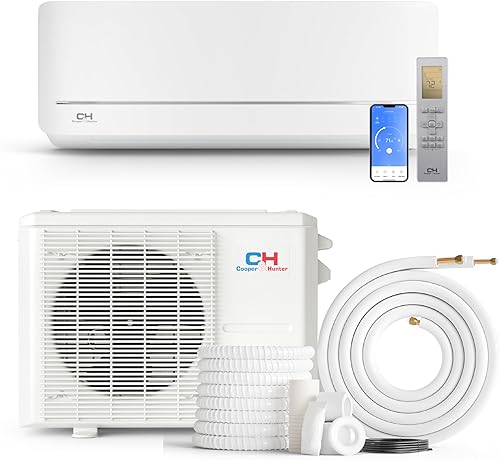
| Cooper & Hunter 18000 BTU 230V | app-focused households | 18,000 BTU | Professional installation required | 8.1 | |
| Cooper & Hunter 24000 BTU 230V | scheduled office comfort | 24,000 BTU | Professional installation required | 8.0 | |
| MRCOOL Easy Pro 18000 BTU 230V | smaller workshop zones | 18,000 BTU | Up to 800 sq ft | 7.8 | |
| Cooper & Hunter 24000 BTU 230V Heat Pump | colder winter regions | 24,000 BTU | Professional installation required | 7.7 | |
| Pioneer Quantum Ultra 24000 BTU 230V | connected open-plan spaces | 24,000 BTU | 7.5 | ||
| MRCOOL Easy Pro 24000 BTU DIY | garage DIY projects | 24,000 BTU | Up to 1,200 sq ft | 7.4 | |
| MRCOOL DIY Select 18000 BTU 230V | smaller DIY additions | 18,000 BTU | Up to 800 sq ft | DIY Quick Connect system | 7.3 |
| MRCOOL DIY Select 24000 BTU 230V | open-plan DIY homes | 24,000 BTU | Up to 1,050 sq ft | DIY Quick Connect system | 7.2 |
Which systems suit a 1,000 sq ft space?
The 24,000 BTU options deserve the first look for a large open zone, subject to a load calculation. The smaller models make more sense for a defined part of the building or a space with a confirmed lower load.
Comparing mini splits for 1,000 sq ft by buyer needs
Use each write-up to identify who should shortlist the system and who should move on. Installation details and room layout can rule out a model before efficiency becomes the deciding factor.
Pioneer Diamante Pro 18000 BTU 230V: Best for smaller living zones
- 18,000 BTU cooling and heating
- Recommended for 500 to 750 sq ft
- 21.0 SEER2
- I FEEL remote sensing
Choose this Pioneer for a smaller living zone where remote temperature sensing helps you manage comfort around a seating area. Its recommended coverage falls below the full 1,000 sq ft target.
Pros
- Motorized vertical and horizontal louvers
- I FEEL remote sensing
- Washable filter
Cons
- Recommended area is below 1,000 sq ft
- App control requires a separate module
Choose the Diamante Pro for a smaller living zone where you want control over airflow and temperature near your chair or desk. Pioneer recommends it for 500 to 750 sq ft, so it should not be the default choice for the full target area.
Its I FEEL remote senses temperature near the controller. Keep the remote near the occupied area, away from direct sun or a heat-producing appliance, so that reading reflects where you sit.
Motorized vertical and horizontal louvers help direct air across an open room. Washable filters and a self-clean cycle simplify parts of upkeep, though the cycle does not replace filter cleaning or drain care.
Pioneer specifies heating operation down to -4°F. Skip this model for an unassessed large zone or if you require included phone control, since its AirLink module is separate; our Pioneer Diamante Pro review covers the system further.
Cooper & Hunter 18000 BTU 230V: Best for app-focused households
- 18,000 BTU heating and cooling
- 19.2 SEER2
- Smart Kit included
- Professional installation required
This MIA suits buyers who want included phone control and a professional installation when the calculated load calls for its capacity. The series-wide coverage range does not confirm coverage for this specific model.
Pros
- Smart Kit included
- Inverter compressor
- 16 ft installation kit
Cons
- Professional installation required
- Heating operation extends down to 5°F
Choose this MIA when the load supports its capacity and you want phone control included with a professionally installed system. Its Smart Kit avoids making app access a separate accessory decision.
The included connection package has a 16 ft insulated copper line set, communication cable and drainage extension. Have the installer measure the actual route, including bends and the rise between units, before assuming that length is enough.
Its inverter compressor varies output as demand changes. Heating operation extends down to 5°F, so colder locations need a separate review of winter output and backup heat.
Skip it if you need a true DIY refrigerant connection or expect a broad series coverage range to prove this model can serve your entire floor. The mini split sizing and install guide helps organize the questions for your installer.
Cooper & Hunter 24000 BTU 230V: Best for scheduled office comfort
- 24,000 BTU heating and cooling
- 18.7 SEER2
- App scheduling
- Professional installation required
App scheduling makes this MIA worth considering for an office or other space with regular occupied hours. Its stated floor area is 600 sq ft, so an installer must resolve its suitability for a larger zone.
Pros
- Smart Kit included
- App scheduling and remote adjustment
- Installation kit included
Cons
- Stated floor area is 600 sq ft
- Professional installation required
Choose this larger MIA for an office with predictable occupied hours when an installer confirms the size. The included Smart Kit supports schedules and remote temperature adjustment, useful when your workday changes.
Its 24,000 BTU capacity does not settle coverage on its own. The stated floor area is 600 sq ft, so resolve that mismatch with the installer before choosing it for a larger room.
The package includes a 16 ft connection kit and requires professional installation. Heating operation extends down to 5°F, making local winter conditions an important part of the assessment.
Skip it if you need a straightforward area match without further sizing work. For a garage, have the installer account for door opening and insulation; our best mini splits for garages guide explores those conditions.
MRCOOL Easy Pro 18000 BTU 230V: Best for smaller workshop zones
- 18,000 BTU
- Coverage up to 800 sq ft
- Heating and cooling
- DIY installation design
Consider this Easy Pro for a smaller workshop or defined zone within a larger building. Confirm its connection method and installation steps before planning the DIY work.
Pros
- Heating and cooling
- Remote control
- Inverter compressor
Cons
- Stated area is below 1,000 sq ft
- Confirm efficiency before comparing energy use
Choose this Easy Pro for a smaller workshop or defined work zone, rather than assuming it will condition the whole building. MRCOOL gives coverage guidance up to 800 sq ft.
Its heating and cooling modes suit a space used across seasons, and the inverter compressor adjusts output. Remote control lets you change settings without walking to the indoor unit.
MRCOOL describes the installation as DIY, but confirm the exact connection method and required tools before planning the job. An Easy Pro name does not mean it uses the same line connections as a DIY Select.
Skip it for the full target area unless a professional assessment supports that choice, and get model-specific heating information if winter use matters. Our guide to mini splits in cold weather explains why low-temperature output deserves its own check.
Cooper & Hunter 24000 BTU 230V Heat Pump: Best for colder winter regions
- 24,000 BTU heating and cooling
- Heating operation down to -13°F
- Smart Kit included
- Professional installation required
This Olivia heat pump deserves a closer look when winter heating drives your choice. Have an installer check its low-temperature heating output and confirm the matched system's efficiency figures.
Pros
- Heating operating limit down to -13°F
- App and remote control
- 16 ft installation kit
Cons
- Professional installation required
- Efficiency figures need model-specific confirmation
Choose this Olivia heat pump for a cold-region shortlist when heating matters as much as cooling. Cooper & Hunter specifies operation down to -13°F, the lowest stated heating limit among these picks.
Ask for its heating output at your local winter design temperature. That figure, compared with the building's heat loss, determines whether you need backup heat.
The system includes app control and a 16 ft installation kit, with professional installation required. Its efficiency figures conflict across the model information, so have the installer confirm the matched indoor and outdoor units before making an energy comparison.
Skip it if you are choosing solely by the lowest operating temperature or expect that figure to promise full heating capacity. Our cold-climate mini split guide explains the winter performance details to compare.
Pioneer Quantum Ultra 24000 BTU 230V: Best for connected open-plan spaces
- 24,000 BTU
- 23 SEER2
- WiFi enabled
- Customizable-length copper lines
The Quantum Ultra suits buyers comparing WiFi-enabled systems for a large open zone. Its customizable-length copper lines make route planning part of the ordering decision.
Pros
- WiFi enabled
- Wireless remote included
- Indoor and outdoor units included
Cons
- Confirm low-temperature heating output
- Confirm required connection lengths before ordering
Choose the Quantum Ultra for a connected open living area when you want to compare a higher-efficiency cooling option. It combines 24,000 BTU capacity, 23 SEER2 and WiFi capability.
The package includes indoor and outdoor units, a wireless remote and customizable-length copper lines and electrical wire. Decide where both units will sit before ordering the connection lengths.
This is worth considering when the route needs more planning than simply placing the outdoor unit behind the indoor head. Have the installer check allowable lengths and height differences against the exact installation manual.
Skip it as a primary winter-heating choice until its cold-weather output is confirmed for your climate. Our mini split heat pump guide explains how cooling efficiency, heating performance and installation fit together.
MRCOOL Easy Pro 24000 BTU DIY: Best for garage DIY projects
- 24,000 BTU
- 18.9 SEER2
- 16 ft line set
- Heating and cooling
This Easy Pro is a candidate for a large garage or game room when its capacity and included connection length fit the project. Check the exact DIY procedure and IWAE labor warranty terms.
Pros
- Stated area includes 1,000 sq ft
- Gold Fin condenser coating
- 1-year labor warranty through IWAE
Cons
- Included line length must fit the route
- Confirm exact installation requirements
Choose this Easy Pro for a garage, game room or sunroom project when its installation procedure suits your skills. Its stated coverage reaches 1,200 sq ft, putting the target area within its guidance.
The included 16 ft line set makes route length an early decision. Measure the full path before mounting anything, and follow the model's rules for routing and handling excess line.
MRCOOL includes a Gold Fin condenser coating for corrosion protection. IWAE provides the included 1-year labor warranty, so check its service process and coverage terms before relying on it.
Skip this option if the connection route or required work does not fit your DIY plan. Our guide to installing a mini split yourself helps separate preparation you can handle from work that needs qualified help.
MRCOOL DIY Select 18000 BTU 230V: Best for smaller DIY additions
- 18,000 BTU
- Coverage up to 800 sq ft
- Pre-charged Quick Connect line set
- Up to 17.3 SEER2
Choose this DIY Select for a smaller addition where its Quick Connect installation and app controls fit your plans. Its coverage guidance falls short of a full 1,000 sq ft space.
Pros
- Pre-charged Quick Connect line set
- App and voice control
- Silent mode
Cons
- Stated area is below 1,000 sq ft
- Local electrical requirements still apply
Choose this DIY Select for a smaller addition with straightforward access to the outdoor unit. Its coverage guidance reaches 800 sq ft, making it a better candidate for part of the building than the entire target area.
The pre-charged Quick Connect line set avoids vacuum pumping, gauges, brazing and refrigerant handling during the prescribed installation. You still need to mount the units, plan drainage, seal the wall opening and meet electrical requirements.
App and voice controls suit a room you use on a changing schedule. MRCOOL quotes sound as low as 18.5 dB(A) in silent mode, which is a specific low-noise setting rather than every operating condition.
Skip it if you need full-floor coverage without a supporting load calculation. For a smaller sleeping space, compare the layout and placement advice in our bedroom mini split guide.
MRCOOL DIY Select 24000 BTU 230V: Best for open-plan DIY homes
- 24,000 BTU
- Coverage up to 1,050 sq ft
- Pre-charged Quick Connect line set
- App and voice control
Start here for an open 1,000 sq ft zone if you want a Quick Connect installation. Its close coverage match still needs support from a load calculation and a workable airflow plan.
Pros
- Stated area includes 1,000 sq ft
- Pre-charged Quick Connect line set
- App and voice control
Cons
- Lower cooling efficiency than several alternatives
- Confirm winter heating output
Start with this DIY Select for an open-plan DIY project near the target size. MRCOOL rates it for up to 1,050 sq ft, the closest stated coverage match in this group.
Its pre-charged Quick Connect lines give the installation a clear distinction from systems requiring conventional refrigerant work. App and voice controls let you manage the zone without keeping the handheld remote nearby.
Cooling efficiency reaches 16.5 SEER2, with heating efficiency up to 8.3 HSPF2. Several alternatives have higher cooling efficiency, so weigh the connection method against expected annual use rather than choosing by convenience alone.
Skip it if your floor consists of separate rooms with closed doors, or if a load calculation calls for a different size. The close area match earns it a place on the shortlist, but airflow and winter output still decide the fit.
What size mini split works for 1,000 sq ft?
The right size comes from separate heating and cooling load calculations. Two buildings with the same floor area can need different equipment because their construction and weather exposure differ.
Give the installer ceiling heights, window sizes, insulation details and the direction large windows face. Include attic or roof exposure and whether the space sits above a garage or beneath another conditioned room.
Explain how you use the area. A workshop with heat-producing equipment and frequent door opening presents a different load from a shaded living room.
Ask for an explanation of the selected capacity, including available heating output during cold weather. A basic area estimate is useful for browsing, but it should not be the final sizing method.
When can a smaller system make sense?
A smaller system makes sense when the calculated load is low or you are conditioning only part of the building. Defining that zone clearly prevents buying equipment around space you do not need to serve.
For example, a separated workroom can have its own comfort target even if the building totals more floor area. Include only the intended zone in its sizing assessment, while accounting for heat transfer through adjoining spaces.
Should you choose 18,000 or 24,000 BTU?
Choose the capacity that covers peak demand while also handling mild-weather operation well. Bigger equipment is not a cure for poor insulation or blocked airflow.
An undersized system may run continuously and still miss the set temperature during severe weather. An oversized system can cycle too often, especially when its minimum output exceeds the room's needs.
In humid climates, short cooling cycles can also leave the room feeling damp. Inverter operation helps match output to demand, but every system still has an operating range.
Ask the installer about minimum output as well as maximum capacity. Choose the size first, then compare SEER2 for cooling and HSPF2 for heating; our mini split running-cost guide explains how usage affects the result.
Can one wall unit serve the whole floor plan?
One wall unit works best in a large connected zone with clear airflow paths. Capacity cannot push conditioned air through closed doors or make every corner reach the same temperature.
Place the indoor head where air can travel across the main occupied area without furniture or walls blocking it. Avoid aiming a persistent stream directly at a sofa, bed or desk.
A central hallway may seem convenient, but cooling the hallway does not ensure comfortable bedrooms. Discuss separate heads or another distribution method if people need different temperatures or routinely close doors.
For a garage attached to living space, define the garage as its own zone. Do not plan to condition adjoining rooms by leaving the connecting door open.
What should you plan before installation?
Plan electrical work, drainage and the connection route before ordering. An included installation kit does not account for every building condition.
These systems use 230V power, so have a qualified electrician check the required circuit, disconnect and wiring against the exact model instructions. Existing nearby power does not prove the circuit is suitable.
Map the drain route with gravity flow where possible. If the water cannot drain downhill to an approved location, our mini split condensate pump guide explains when a pump becomes part of the plan.
Choose an outdoor location with the required service and airflow clearances. Keep it away from runoff and debris buildup, and account for snow and defrost water where winter heating is important.
For freight deliveries, plan how the equipment will move from the accessible drop-off point to its mounting location. Arrange that help before the delivery day.
What does DIY still leave you to do?
A DIY connection system still leaves mounting, routing, drainage and electrical planning to solve. Quick Connect simplifies a specific part of installation rather than the whole project.
Read the full manual before drilling the wall opening. Check for hidden wiring or plumbing, plan a weather-tight seal and confirm the wall can support the mounting hardware.
Keep connection lines protected while routing them, and follow the prescribed bend limits. Do not improvise extensions, trim pre-charged lines or assume different models use interchangeable parts.
How should you use and care for the system?
Use steady settings and regular cleaning to help the system maintain comfort. Large temperature swings can create a long recovery period, especially during very hot or cold weather.
Start with a comfortable setpoint and adjust gradually. A very low cooling setting does not increase the unit's maximum cooling capacity.
Inspect filters on the schedule in the manual, checking more often in dusty workshops or homes with pets. Let washable filters dry as directed before reinstalling them.
Keep indoor air inlets and outlets clear, and remove leaves or other debris around the outdoor unit. Do not spray harsh cleaners onto coils or electrical parts.
Check that condensate reaches its intended drain location during cooling. Arrange service for indoor dripping, repeated icing or a sudden loss of comfort instead of repeatedly changing settings.
During winter, allow normal defrost cycles to finish. Keep snow from blocking the outdoor unit, and follow the installer’s plan for backup heat during extreme conditions.
Which buying mistakes should you avoid?
Avoid buying by floor area, product score or the word DIY alone. Each can narrow your choices, but none proves the complete system fits your building.
Do not confuse a pre-charged condenser with pre-charged Quick Connect lines. A conventional system can arrive with refrigerant in the outdoor unit and still require professional installation.
Do not choose a heating system solely because it can operate at a low temperature. Compare delivered heat with the building's heat loss at that temperature.
Do not assume a quieter mode delivers the same output as a higher fan setting. Plan placement around the sound and airflow needed during heavy demand.
Finally, confirm who will install and service the exact system before ordering. Equipment that your local installer will not support can complicate an otherwise workable project.
Which mini split should you choose for 1,000 sq ft?
Choose a mini split for 1000 sq ft by matching the buyer situation to a confirmed load. For an open zone and a Quick Connect installation, start with the MRCOOL DIY Select 24000 BTU 230V.
Compare the larger Easy Pro for a garage or game room when its connection route and DIY procedure fit. For professional installation with app control, consider the MIA models after the installer resolves capacity and coverage.
Put the Olivia on your cold-region shortlist when winter heating drives the choice. Choose the smaller Pioneer or MRCOOL options for a defined smaller zone or a confirmed lower-load space.
Before ordering, settle the load, indoor-head location, electrical work and drainage route. Use our guide to choosing mini split capacity to prepare those details for an installer assessment.
Our top 3 picks at a glance
-
1
-
2
-
3
Frequently asked questions
What size mini split do I need for 1,000 sq ft?
Choose capacity from a heating and cooling load calculation, with 18,000 and 24,000 BTU systems as options to compare. Insulation, windows, ceiling height and climate can change the answer substantially.
Have the installer assess airflow between rooms as well, since enough total capacity cannot overcome closed doors.
Is 18,000 BTU enough for 1,000 sq ft?
An 18,000 BTU system can be suitable when a room-specific load calculation supports that size, but several models here recommend smaller areas. Do not stretch their coverage guidance based on floor area alone.
A sunny room, weak insulation or frequent garage-door opening makes a smaller system harder to justify.
Is 24,000 BTU too much for 1,000 sq ft?
A 24,000 BTU system may be appropriate or oversized, depending on the space's heat gain and heat loss. An inverter can vary output, but it still has a minimum operating capacity.
Ask an installer to compare that minimum with mild-weather needs as well as checking capacity during peak conditions.
Can one mini split cool several rooms?
One wall unit works best in an open zone with a clear path for supply and return air. Separate rooms may stay warmer or colder even when their combined area fits the system's coverage guidance.
For bedrooms used with closed doors, discuss separate indoor units or another distribution plan.
Can I install a mini split myself?
Some systems support DIY installation, including the MRCOOL DIY Select options with pre-charged Quick Connect lines. Cooper & Hunter requires professional installation for the systems here.
Follow the exact model instructions and arrange qualified electrical work where required; our DIY mini split installation guide explains how to plan the job.


