Cooper & Hunter 18,000 BTU Mini Split Review: Worth It? (November 2026)
The Cooper and Hunter mini split suits a single room or open zone that needs 18,000 BTU heating and cooling with app control included. Choose the MIA only after an installer confirms the size and winter heating capacity fit your space.
On this page (10 sections)
- Cooper and Hunter mini split: the short verdict
- What comes with the MIA system?
- Is 18,000 BTU the right size for your room?
- How does the winter heating limit affect your choice?
- What should the installation quote include?
- How should you use and care for the MIA?
- How does the Pioneer Diamante Pro compare?
- When should you choose the larger Cooper & Hunter MIA?
- Which Cooper and Hunter mini split should you choose?
- Sources
The Cooper and Hunter mini split is a good fit for a room addition or open zone that needs independent heating and cooling with phone control included. Choose the MIA 18,000 BTU model when a room-specific load calculation supports that size and you plan to hire an installer.
Its main buying checks are winter performance, airflow and the full installation scope. Getting those right matters more than choosing the largest unit or the longest feature list.
Cooper and Hunter mini split: the short verdict
The MIA suits buyers who want included app control and a professionally installed single-zone system. Skip it if you need a DIY installation or dependable primary heat in conditions beyond its stated winter operating range.
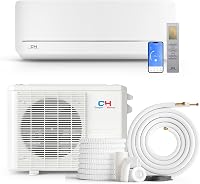
Cooper & Hunter 18000 BTU 230V: Best for connected room additions

- 18,000 BTU heating and cooling
- 19.2 SEER2
- Smart Kit included
- 16 ft installation kit
A single-zone heat pump for an addition or open room where app control matters. Have an installer confirm the room load, electrical work and winter performance before ordering.
Pros
- Smart Kit included
- Inverter compressor adjusts output
- Pre-charged condenser
- U.S.-based technical support
Cons
- Professional installation required
- Heating operation specified down to 5°F
- One air handler won't evenly serve closed rooms
Who should buy the Cooper and Hunter mini split?
Buy it for a defined space where one high-wall air handler can move air across the occupied area. A room addition separated from the home's ductwork is a sensible use, provided its heating and cooling loads match the unit.
The inverter compressor adjusts output as demand changes, helping the system maintain a steadier temperature. That makes correct sizing useful during ordinary weather as well as the hottest or coldest days.
Skip this layout if your real goal is to condition several bedrooms with their doors shut. One temperature setting and one air outlet won't give each closed room independent comfort.
Also skip it if you want equipment you can connect yourself. Arrange a contractor before ordering, rather than assuming any installer will accept customer-bought equipment.
What comes with the MIA system?
The package includes both indoor and outdoor units, phone controls and connection materials. It gives your installer a starting kit, but the route and electrical work determine what else the job needs.
| Detail | Cooper & Hunter MIA 18,000 BTU |
|---|---|
| System type | Single-zone ductless heat pump |
| Capacity | 18,000 BTU heating and cooling |
| Electrical supply | 230V |
| Seasonal cooling efficiency | 19.2 SEER2 |
| Indoor unit | High-wall air handler |
| Controls | Included Smart Kit and remote |
| Connection kit | 16 ft insulated copper line set, communication cable and drainage extension |
| Outdoor unit | Pre-charged condenser |
Measure the actual connection route, including bends and vertical travel, rather than the straight distance through the wall. A condenser just outside the room can still need a longer route to reach a suitable mounting location.
The drainage extension also needs a workable path. Cooling removes moisture from indoor air, and that water must drain somewhere suitable without damaging the building.
Both MIA models arrive by freight at the nearest accessible point outside your home. Plan how the equipment will reach its installation location, and inspect the shipment before the installation appointment.
Is 18,000 BTU the right size for your room?
Choose this capacity only when the room's calculated heating and cooling loads support it. Floor area is a starting measurement, not a complete sizing method.
Large windows, afternoon sun and a poorly insulated roof can raise cooling demand. Air leaks, cold outdoor temperatures and exposed walls can increase the heat needed in winter.
Cooper & Hunter's broad coverage range spans several MIA capacities, so it isn't a room-size promise for this model. Give your contractor the room dimensions, ceiling height, window details and insulation information instead.
An undersized system can run for long periods without reaching your setting during extreme weather. Too much capacity can cause short runs and weaker moisture removal, especially when the unit's minimum output exceeds the room's demand.
Inverter operation helps match changing loads, but it doesn't make oversizing harmless. Ask why the proposed size fits both peak demand and milder conditions.
Use our mini split sizing guide to prepare those details. For the wider equipment picture, our mini split heat pump guide explains sizes, system types and installation basics.
How does the winter heating limit affect your choice?
Cooper & Hunter specifies MIA heating operation down to 5°F. Ask your installer to compare the unit's output at your local winter design temperature with the room's heat loss.
An operating limit describes how cold the equipment can run, while heating capacity describes how much heat it can deliver. You need both figures if this will be the room's main heat source.
A workshop used occasionally has different needs from a bedroom that must stay warm overnight. Explain the room's use and whether another heat source will remain available.
During cold, damp weather, heat pumps may pause normal heating to defrost the outdoor coil. Keep the outdoor unit's airflow and drainage clear so frost and meltwater don't create avoidable problems.
Read our cold-weather mini split guide before making this your only heat source. If local conditions exceed the system's range, choose equipment suited to that climate and agree on backup heat.
What should the installation quote include?
Get a written scope covering the complete working system, including electrical work, drainage and startup. Cooper & Hunter requires professional installation even though the outdoor condenser arrives pre-charged.
Ask the contractor to address these items before you order:
- Electrical supply: the required circuit, disconnect and any panel work.
- Indoor placement: mounting strength, service access and an unobstructed air path.
- Outdoor placement: stable support, required clearances and access for maintenance.
- Refrigerant route: connection length, wall penetrations and any extra materials.
- Drainage: a suitable discharge point and a gravity route where practical.
- Completion: permits where required, refrigerant-system checks, startup and control setup.
A high-wall unit needs room around it for airflow and filter access. Avoid placing it where a tall cabinet blocks discharge or where the air stream blows directly onto a bed or desk.
If gravity drainage won't work, discuss a pump before the quote is finalized. Our mini split condensate pump guide explains when that extra component becomes useful.
Cooper & Hunter requires registration directly with the brand within 60 days of installation. Keep the installation invoice, model details and registration confirmation together.
For the distinction between equipment types, read whether you can install a mini split yourself. An included connection kit doesn't change this MIA model's professional-install requirement.
How should you use and care for the MIA?
Start with a steady, comfortable setting and clear airflow, then adjust based on how the occupied part of the room feels. Repeatedly selecting an extreme temperature won't turn a sizing or placement problem into faster comfort.
Use the phone controls for convenient changes when you're away from the remote. Complete setup during installation so you can confirm that the system responds before the contractor leaves.
For long absences, a moderate temperature setback can reduce the work required. Avoid deep setbacks during severe weather if the system then struggles to recover when you return.
Follow the manual's filter-cleaning schedule, and inspect more often in dusty spaces. Turn the unit off before routine cleaning, and keep water away from electrical parts.
Keep leaves, stored items and plants away from the outdoor unit. Don't build a tight enclosure around it to hide it, because restricted airflow makes heating and cooling harder.
Watch for new dripping indoors, persistent odors, unusual sounds or declining airflow. Arrange service rather than masking the symptom with a lower thermostat setting or a higher fan speed.
Dry mode can help manage moisture under suitable conditions, but it won't fix water leaks or an overflowing drain. Schedule professional care according to the manual and local conditions.
How does the Pioneer Diamante Pro compare?
Choose the Pioneer alternative for its lower stated heating operating limit and higher seasonal cooling efficiency. The MIA remains convenient for buyers who want phone control included in the package.
Pioneer Diamante Pro 18000 BTU 230V: Best for colder winters

- 18,000 BTU heating and cooling
- 21.0 SEER2
- Heating down to -4°F
- Optional app module sold separately
The stronger alternative for buyers comparing winter operating range and seasonal cooling efficiency. Its remote includes room-side temperature sensing, while phone control needs a separate module.
Pros
- 21.0 SEER2
- Heating operation down to -4°F
- I FEEL remote sensing
- Washable filter and self-clean cycle
Cons
- App module sold separately
- Low-temperature heating output still needs a room-load check
The Pioneer provides 18,000 BTU heating and cooling, with 21.0 SEER2 efficiency and heating operation down to -4°F. Its recommended area is 500 to 750 sq ft, subject to a room-specific load check.
SEER2 compares seasonal cooling efficiency under standard conditions. It doesn't give your electricity bill, and it shouldn't outweigh correct sizing, installation quality or the heating performance your climate requires.
Pioneer's motorized up-down and left-right louvers give you more ways to direct air across the room. Its I FEEL remote senses temperature near the controller, which helps when the seating area feels different from the wall-unit location.
Place that remote away from direct sun and other heat sources when using its sensor. Otherwise, it may sense conditions that don't represent where you sit.
Pioneer also includes a washable dust filter and self-clean cycle, while app control requires a separately sold module. The self-clean feature supplements routine care rather than replacing filter cleaning or professional service.
Skip Pioneer if included phone control is your deciding feature and the MIA already meets your climate needs. Read the Pioneer Diamante Pro review for more detail.
The Senville LETO review and Della Vario review offer other single-zone comparisons. Keep the same room load and installation scope when weighing alternatives.
When should you choose the larger Cooper & Hunter MIA?
Choose the larger MIA when a load calculation calls for more capacity in one open zone. Don't use it as a shortcut for moving air into several closed rooms.
Cooper & Hunter 24000 BTU 230V: Best for larger open spaces
- 24,000 BTU heating and cooling
- 18.7 SEER2
- Smart Kit included
- 16 ft installation kit
The higher-capacity MIA suits a larger open zone when a load calculation calls for it. It keeps the included phone controls, but doesn't extend the smaller model's winter operating range.
Pros
- More capacity for higher room loads
- Smart Kit included
- Pre-charged condenser and installation kit
- U.S.-based technical support
Cons
- Professional installation required
- Heating operation specified down to 5°F
- Extra capacity won't solve airflow between closed rooms
This version provides 24,000 BTU heating and cooling, with an 18.7 SEER2 figure. It retains the included Smart Kit and connection kit, plus the same winter operating limit as the smaller MIA.
A large bonus room, open office or garage may justify the extra output. The deciding factors are the building's heat gain and heat loss, not simply the room's label.
Garages deserve particular attention because door openings, roof insulation and air leakage can change demand sharply. Tell the installer whether you need occasional comfort while working or steady conditions throughout the day.
Skip the larger model if the smaller one meets the calculated load. Extra output won't fix poor placement, blocked airflow or a drafty building.
Our comparison of 18,000 and 24,000 BTU mini splits helps frame that choice. Size first, then compare controls and efficiency within the suitable capacity.
Which Cooper and Hunter mini split should you choose?
Pick the MIA 18,000 BTU when its calculated capacity fits your room, its winter output meets your needs and included app control matters. Move to the larger MIA only when the same assessment calls for more output.
Choose Pioneer when the colder operating range is useful, while checking its actual heating output at your design temperature. Allow for the separate app module if phone control is part of your plan.
Before ordering a Cooper and Hunter mini split, get the installation scope and equipment choice agreed in writing. Use the mini split sizing guide to bring the right room details to that conversation.
Sources
Cooper & Hunter's brand information and the Department of Energy's ductless-system guidance offer further reading on equipment and installation planning.
Frequently asked questions
Does the Cooper & Hunter 18,000 BTU mini split heat in cold weather?
Yes, Cooper & Hunter specifies heating operation down to 5°F for this MIA system; ask an installer to compare its heating output at your winter design temperature with the room's heat loss. An operating limit alone doesn't show whether the unit can keep that room warm without backup heat.
Does the Cooper & Hunter 18,000 BTU mini split need professional installation?
Yes, Cooper & Hunter requires professional installation for this MIA system; the pre-charged condenser and included connection kit don't make it a DIY unit. Arrange the electrical work, refrigerant connections, drainage and startup with qualified tradespeople, then register the system directly with Cooper & Hunter within 60 days of installation.
Can you control the Cooper & Hunter MIA with a phone?
Yes, the MIA includes a Smart Kit for smartphone app control, plus a remote; confirm the app and home network requirements before installation, and complete pairing while your installer is there. Keep the remote accessible so someone in the room can adjust comfort without reaching for a phone.
How do you choose between the 18,000 and 24,000 BTU Cooper & Hunter?
Choose the capacity that matches a room-specific heating and cooling load calculation; ask the installer to account for insulation, glass, ceiling height, sun exposure and local climate. The larger MIA makes sense for a higher load, but extra capacity won't carry conditioned air through closed doors or around tight corners.