9 Best DIY Mini Splits (November 2026)
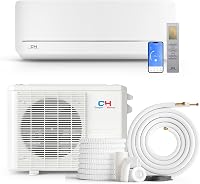
The best DIY mini split systems include the DELLA Vario 12000 BTU Pre-Charged for hiring an installer, the MRCOOL Easy Pro 18000 BTU 230V for open living areas, and the MRCOOL Easy Pro 9000 BTU for small offices.
On this page (15 sections)
- How we chose the best DIY mini split systems
- Highest-scoring comparison: professional installation required
- Top DIY choice for larger spaces
- A smaller DIY choice for offices and enclosed rooms
- A larger Easy Pro for game rooms and sunrooms
- A compact Pioneer comparison for limited wall space
- A Quick Connect choice for workshop conversions
- A larger Quick Connect choice for shops and additions
- A mid-size Easy Pro for multipurpose spare rooms
- A smaller Quick Connect system for bedroom upgrades
- What should you check before choosing a DIY mini split?
- How should you plan the installation before delivery?
- Which mistakes most often undermine a DIY mini split project?
- How do you care for and use a DIY mini split?
- Which best DIY mini split fits your project?
The MRCOOL Easy Pro 18000 BTU 230V is the best DIY mini split here by score when its capacity matches your room. Choose a smaller system for a lower room load, or DIY Select if a pre-charged Quick Connect line set is your priority.
The higher-scoring DELLA Vario is a professional-install comparison, while Pioneer's installation method needs confirmation. Neither should become your DIY choice simply because its condenser comes charged.
Start with our guide to installing a mini split yourself and use the mini split size guide to narrow the capacity.
Our picks at a glance
-
1

-
2

-
3
- 4
 Best for large game roomsCheck it
- 5
 Check it
Pioneer Diamante Essenza 11500 BTU 115V
Best for limited wall space - 6
 Check it
MRCOOL DIY Select 18000 BTU 230V
Best for workshop conversions - 7Check it
MRCOOL DIY Select 24000 BTU 230V
Best for larger shop conversions - 8Best for multipurpose spare roomsCheck it
- 9Check it
MRCOOL DIY Select 12000 BTU 115V
Best for DIY bedroom upgrades
How we chose the best DIY mini split systems
We compared installation method, room fit, electrical needs and useful controls across 9 systems. MRCOOL provides the DIY choices here, while DELLA and Pioneer help show the difference between a charged system and a clearly described DIY connection.
The scores stay in descending order, but installation fit comes first. DELLA's higher score does not make it suitable for work the brand requires an HVAC professional to complete.
DIY Select has the clearest connection description: a pre-charged Quick Connect line set. MRCOOL also describes Easy Pro as DIY-ready, so compare the exact manuals rather than assuming both families use identical parts or steps.
We favor capacity that matches the room over extra output you won't use. Controls and comfort modes help separate similar choices after you've settled sizing, power and placement.
| Product | Best for | Capacity | Coverage | Installation | Our score |
|---|---|---|---|---|---|
| DELLA Vario 12000 BTU Pre-Charged | hiring an installer | 12,000 BTU | Up to 550 sq ft | Professional installation required | 8.5 |
| MRCOOL Easy Pro 18000 BTU 230V | open living areas | 18,000 BTU | Up to 800 sq ft | 7.8 | |
| MRCOOL Easy Pro 9000 BTU | small offices | 9,000 BTU | Up to 400 sq ft | 7.6 | |
| MRCOOL Easy Pro 24000 BTU DIY | large game rooms | 24,000 BTU | Up to 1,200 sq ft | 7.4 | |
| Pioneer Diamante Essenza 11500 BTU 115V | limited wall space | 11,500 BTU | Up to 500 sq ft | 7.4 | |
| MRCOOL DIY Select 18000 BTU 230V | workshop conversions | 18,000 BTU | Up to 800 sq ft | 7.3 | |
| MRCOOL DIY Select 24000 BTU 230V | larger shop conversions | 24,000 BTU | Up to 1,050 sq ft | 7.2 | |
| MRCOOL Easy Pro 12000 BTU | multipurpose spare rooms | 12,000 BTU | Up to 550 sq ft | 7.0 | |
| MRCOOL DIY Select 12000 BTU 115V | DIY bedroom upgrades | 12,000 BTU | Up to 550 sq ft | 6.8 |
Highest-scoring comparison: professional installation required
The DELLA Vario suits buyers who want room control features and will hire an installer. Skip it if connecting the refrigerant lines yourself is a firm requirement.
DELLA Vario 12000 BTU Pre-Charged: Best for hiring an installer
- Remote temperature sensor
- Dehumidifying mode
- 16.4 ft installation kit
- Professional installation required
Choose the Vario if you want room control features and will hire an HVAC installer. Its cooling-mode remote sensor measures temperature near where you sit.
Pros
- Remote temperature sensing during cooling
- Sleep and eco modes
- Installation kit included
Cons
- Professional installation required
- Line-set changes require refrigerant adjustment
Its cooling-mode remote sensor measures temperature near the remote instead of only at the indoor head. That can suit a home office where your desk sits away from the wall unit.
Keep the remote near the occupied area and away from direct sun or heat-producing equipment when using that feature. A sensor beside a warm computer can give a different picture from the rest of the room.
The Vario includes dehumidifying, sleep and eco modes, plus a 24-hour timer. DELLA states that it can operate down to -4°F, but winter sizing still needs its heating output at your local design temperature.
Professional installation and line-set vacuuming are required. The included 16.4 ft kit doesn't change that, and altering line length requires refrigerant adjustment.
Choose it if an installer will handle the complete setup and you value temperature sensing near your seat. Have the installer approve the route before deciding where the head should go.
Top DIY choice for larger spaces
The MRCOOL Easy Pro 18000 BTU 230V is the highest-scoring DIY option here for a matching larger-room load. It's a stronger fit for an open living area than several closed rooms.
MRCOOL Easy Pro 18000 BTU 230V: Best for open living areas
- 18,000 BTU
- Up to 800 sq ft
- Heating and cooling
- 230V
The highest-scoring DIY option suits an open room with a matching heating and cooling load. Plan the electrical supply before choosing installation locations.
Pros
- Designed for DIY installation
- Inverter system
- Residential and small commercial use
Cons
- Requires 230V power
- Check exact connection requirements before buying
This inverter heat pump provides heating and cooling with claimed coverage up to 800 square feet. Homes, offices and small commercial spaces are its intended uses.
Choose it when air can move freely through the area you want to condition. A central indoor head still won't deliver the same temperature behind closed bedroom doors.
The 230V supply deserves attention before you map the installation. Have the required circuit, disconnect and wiring work checked early so the electrical route and refrigerant route can be planned together.
Skip this capacity if your load calculation calls for a smaller system. Extra output is not a substitute for insulation or better airflow.
For a garage, use our mini split garage guide to account for doors and ceiling height. The DIY installation guide explains where professional help can fit into the project.
A smaller DIY choice for offices and enclosed rooms
The MRCOOL Easy Pro 9000 BTU is the starting point for a small office or bedroom with a modest load. Skip it when the room needs more output than this smallest option can deliver.
MRCOOL Easy Pro 9000 BTU: Best for small offices
- 9,000 BTU
- Up to 400 sq ft
- 115V
- Voice assistant support
Start here for a smaller enclosed room that doesn't need the capacity of the larger systems. Sleep mode and washable filters support everyday use.
Pros
- Lowest capacity in this group
- Google Assistant and Alexa support
- Washable filters
Cons
- Unsuitable for larger room loads
- 115V still requires a suitable circuit
It uses 115V power and is intended for rooms up to 400 square feet. Heating and cooling modes let one system serve the room through changing seasons.
The sleep function can adjust temperature overnight, while Google Assistant and Amazon Alexa support offer another way to change settings. Washable filters are useful in a room occupied daily.
For an office, plan airflow so it reaches the work area without blowing steadily across your face or papers. Leave access to the front panel rather than mounting the head above shelving that makes filter care awkward.
A smaller room can still have a high load from large windows or strong afternoon sun. Choose this model after accounting for those conditions, and move up only when the calculation supports it.
Don't assume its voltage means any nearby household circuit is suitable.
A larger Easy Pro for game rooms and sunrooms
The MRCOOL Easy Pro 24000 BTU DIY suits a large open room with a load that calls for this capacity. Skip it for a small bedroom or a group of rooms divided by closed doors.
MRCOOL Easy Pro 24000 BTU DIY: Best for large game rooms
- 24,000 BTU
- 16 ft line set
- 18.9 SEER2
- Gold Fin condenser coating
Consider this larger Easy Pro for an open game room, garage or sunroom with a matching load. The included line set makes route planning an early buying task.
Pros
- Heating and cooling
- Line set included
- IWAE includes a 1-year labor warranty
Cons
- Too much capacity for many smaller rooms
- Confirm electrical requirements and warranty conditions
This model includes a 16 ft line set and has an 18.9 SEER2 cooling efficiency figure. It provides heating and cooling for uses such as garages, game rooms and sunrooms.
A sunroom needs particular care because glass area and sun exposure can change the load sharply. Measure the space and describe its windows before accepting a floor-area estimate.
The Gold Fin condenser coating is intended to help protect against corrosion. It doesn't remove the need for suitable outdoor placement and routine cleaning around the unit.
IWAE includes a 1-year labor warranty with this package. Confirm its conditions, service process and required installation records before counting on that coverage.
Plan the line route around the actual distance, bends and wall entry. A short straight-line measurement between the units can overlook much of the path.
A compact Pioneer comparison for limited wall space
The Pioneer Diamante Essenza is worth comparing when indoor wall space is tight and installation will follow Pioneer's requirements. Skip it if you need an explicitly described Quick Connect setup.
Pioneer Diamante Essenza 11500 BTU 115V: Best for limited wall space
- Compact indoor head
- 115V
- 17 SEER2
- 16 ft installation kit
The compact indoor head suits rooms where usable wall space is tight. Confirm the installation method before treating its factory charge as a reason to choose DIY work.
Pros
- Front-access washable filters
- Inverter compressor
- Line set and drain hose included
Cons
- Quick Connect installation is not specified
- Factory charge alone does not confirm DIY suitability
Its indoor head measures 30.5 inches wide, 9.75 inches high and 7.88 inches deep. Allow the manual's clearances around those dimensions rather than fitting it into a gap of the same size.
The system provides 11,500 BTU, uses 115V power and has 17 SEER2 cooling efficiency. Its claimed room coverage reaches 500 square feet.
Pioneer includes a 16 ft line set, drain hose, remote and essential installation components. The factory-charged condenser should not be confused with confirmation that refrigerant connections need no specialist work.
Front-access washable filters make access worth planning before mounting the unit. Leave enough room to open the panel without reaching over a tall cabinet.
Pioneer describes the indoor unit as quiet, but no comparable numeric sound figure is available here. Choose it for its physical fit and room capacity, with the installation method settled first.
A Quick Connect choice for workshop conversions
The MRCOOL DIY Select 18000 BTU 230V suits a workshop conversion when the room load fits and simplified refrigerant connections matter. It provides an explicit connection method for buyers comparing it with Easy Pro.
MRCOOL DIY Select 18000 BTU 230V: Best for workshop conversions
- 18,000 BTU
- Pre-charged Quick Connect line set
- App and voice control
- 230V
Choose this DIY Select when its room capacity fits and avoiding conventional refrigerant connection work is a priority. App control also suits a workshop used on an irregular schedule.
Pros
- Pre-charged Quick Connect line set
- No vacuum pump or gauges required for connection
- MRCOOL Comfort App support
Cons
- Requires 230V power
- Confirm line-set length before planning the route
Its pre-charged Quick Connect line set needs no vacuum pump, gauges, brazing or refrigerant handling for connection, according to MRCOOL. You'll still need to mount equipment, route lines and drainage, and arrange suitable electrical work.
The MRCOOL Comfort App and voice support suit a workshop used on an irregular schedule. Remote controls don't replace the need to keep sawdust and other debris away from filters and outdoor airflow.
Cooling efficiency reaches up to 17.3 SEER2, with heating efficiency up to 8.5 HSPF2. MRCOOL gives a silent-mode minimum of 18.5 dB(A), which applies to that mode rather than every operating condition.
Skip it for a room with a smaller calculated load or where the line route won't work. Our guide to pre-charged mini split systems explains the connection difference.
A larger Quick Connect choice for shops and additions
The MRCOOL DIY Select 24000 BTU 230V fits a larger open shop or addition that needs this output. Choose the smaller DIY Select when its capacity is enough.
MRCOOL DIY Select 24000 BTU 230V: Best for larger shop conversions
- 24,000 BTU
- Up to 1,050 sq ft
- Pre-charged Quick Connect line set
- App and voice control
This is the larger DIY Select choice for an open shop or addition with a matching load. It combines Quick Connect installation with app and voice controls.
Pros
- Pre-charged Quick Connect line set
- Heating and cooling
- Inverter operation
Cons
- Requires 230V power
- Excess capacity can hurt comfort in smaller rooms
MRCOOL gives this model coverage up to 1,050 square feet. That is not a promise of even temperatures throughout a home with separate rooms.
Its cooling efficiency reaches up to 16.5 SEER2, and heating efficiency reaches up to 8.3 HSPF2. App and voice control let you adjust settings without walking back to the indoor head.
MRCOOL gives a minimum sound figure of 21.5 dB(A) in silent mode. Compare sound figures only when they refer to similar modes and equipment locations.
The Quick Connect method is the main installation reason to choose this model. Confirm the available line length and where excess line can be managed according to the manual before buying.
Skip it if the room load is much lower or the building needs separate temperature zones. One powerful indoor head cannot overcome every wall, doorway and airflow restriction.
A mid-size Easy Pro for multipurpose spare rooms
The MRCOOL Easy Pro 12000 BTU suits a spare room used for work, guests or hobbies when its load fits. It offers heating, cooling and dehumidifying without moving to one of the larger systems.
MRCOOL Easy Pro 12000 BTU: Best for multipurpose spare rooms
- 12,000 BTU
- 115V
- Heating, cooling and dehumidifying
- Washable filters
Consider this Easy Pro for a spare room used as an office, guest room or hobby space. It offers several operating modes without moving to a larger-capacity system.
Pros
- Heating, cooling and dehumidifying modes
- Google Assistant and Alexa support
- System and line set included
Cons
- Check exact installation steps
- Coverage is a sizing starting point
This 115V model has claimed coverage up to 550 square feet and comes with a line set. MRCOOL describes it as designed for DIY installation.
Google Assistant and Amazon Alexa support can help when the room serves several uses. Set a comfortable temperature for occupied hours rather than making large changes each time you walk in.
Washable filters rinse clean with water. Follow the manual's drying instructions before putting them back, and check them more often if pets or hobby work add dust.
Choose this model over the smaller Easy Pro when the room actually needs the added capacity. Skip it if your main reason for buying is an explicitly described pre-charged Quick Connect line set.
Read the exact installation instructions before ordering accessories. Our mini split sizing guide helps separate a sensible capacity step from unnecessary oversizing.
A smaller Quick Connect system for bedroom upgrades
The MRCOOL DIY Select 12000 BTU 115V suits a bedroom or office with a matching load and a workable Quick Connect route. Its lower score doesn't rule it out when that installation method is your deciding factor.
MRCOOL DIY Select 12000 BTU 115V: Best for DIY bedroom upgrades
- 12,000 BTU
- 115V
- Pre-charged Quick Connect line set
- App and voice control
Choose this smaller DIY Select when the room load fits and the Quick Connect method is central to your plan. Its silent mode offers a low minimum sound figure for overnight use.
Pros
- Pre-charged Quick Connect line set
- 115V power
- MRCOOL claims 17.5 dB(A) in silent mode
Cons
- Not the right size for every bedroom
- Electrical and local installation requirements still apply
MRCOOL claims sound as low as 17.5 dB(A) in silent mode. That makes it worth considering for overnight use, while placement still matters for drafts and access.
Cooling efficiency reaches up to 17.5 SEER2, with heating efficiency up to 9.0 HSPF2. App and voice controls offer options beyond reaching for a remote.
Before mounting the head, check where the bed, desk and curtains sit. Aim for room circulation without directing a steady stream of air at the pillow.
Skip this model if a smaller system better matches the bedroom's load. A bedroom label doesn't make one capacity right for every sleeping space.
The pre-charged connection simplifies one part of installation. Confirm the electrical circuit, drainage and wall route before deciding that the entire project fits your skills.
What should you check before choosing a DIY mini split?
Check room load, installation method, power and the complete route before choosing a system. Settle those points before comparing apps or small efficiency differences.
How do you size the best DIY mini split for your room?
Use a room load calculation that considers heating and cooling needs. Floor-area coverage is a starting point, especially in garages, sunrooms and rooms with high ceilings.
Include insulation, window size, sun exposure, air leakage and local climate. Oversizing can lead to shorter operating cycles and weaker moisture removal, while undersizing can leave the system running without reaching your set temperature.
Our guide to choosing a mini split size explains the measurements to gather. For the broader system choices, read our mini split heat pump guide.
Does pre-charged mean easy installation?
A charged outdoor unit and a pre-charged Quick Connect line set are different things. Conventional connections may still require vacuuming and professional refrigerant work.
Read the complete manual for the exact model before buying tools. Our article on whether pre-charged mini splits simplify installation explains why the connection method matters.
Should you choose 115V or 230V?
Choose the voltage that fits the correctly sized system and a properly planned circuit. 115V doesn't mean any nearby outlet or shared circuit will work.
Have an electrician confirm the required wiring, circuit protection and disconnect arrangement. Include that work in the project plan before mounting equipment.
Can a DIY mini split work in a garage?
A DIY mini split can work in a garage when its heating output and cooling capacity match the space. Insulating and sealing the garage can reduce the load before you choose equipment.
For a two-car space, use our guide to mini split sizing for a 2 car garage. If this will be the main heat source, check output at local winter temperatures rather than relying on an operating-limit claim.
How should you plan the installation before delivery?
Map mounting, lines, drainage and power together before the equipment arrives. A good location must work for all four, not just look tidy indoors.
Choose accessible mounting locations
Place the indoor head where air can circulate through the occupied space. Check wall construction, required clearances and hidden pipes or wiring before drilling.
Keep the outdoor unit clear of blocked airflow and places where roof runoff or debris will collect. Follow the manual for its support, anchoring and clearance requirements.
Measure the full line route
Measure along the intended path, including bends and changes in height. Confirm allowable line length and elevation difference for the exact system.
Don't plan to cut, extend or tightly coil a pre-charged line without explicit instructions allowing it. Protect the route from damage and arrange a neat wall entry that can be sealed against weather and pests.
Give condensate a reliable exit
Cooling creates water that needs a clear drainage path. Plan a continuous downhill route where gravity drainage is used, and avoid low spots that can hold water.
If the layout prevents that route, read our guide to whether you need a mini split condensate pump before fixing the head location. Don't discharge water where it can damage the building or create a slippery walkway.
Arrange help before you need it
Read the manual from start to finish and separate the work you can complete from tasks needing qualified help. Permits, electrical work, lifting equipment and access can determine the project's timing.
Keep model details, installation records and warranty documents together. Follow the required startup checks, including drainage, rather than assuming cold air alone means the job is complete.
Which mistakes most often undermine a DIY mini split project?
The biggest mistakes are buying before sizing, assuming connections are interchangeable and leaving drainage until last. Prevent them while the layout is still easy to change.
- Buying extra capacity for reassurance: Match the load instead, since excess output can reduce comfort.
- Treating voltage as the whole electrical plan: Circuit requirements go beyond the number on the box.
- Expecting one head to serve closed rooms: Check airflow paths and separate comfort needs.
- Forcing the line route: Tight bends or unsupported lines can turn a convenient location into a poor installation.
- Comparing minimum sound figures directly: Silent-mode indoor figures aren't equivalent to outdoor sound or full-output operation.
- Choosing a timer before checking winter output: Controls cannot compensate for inadequate heating capacity.
How do you care for and use a DIY mini split?
Keep filters, airflow and drainage clear, and use steady temperature settings for everyday comfort. Follow the exact manual for cleaning and service intervals.
Check filters regularly, with closer attention in dusty rooms or homes with pets. Clean washable filters as directed, let them dry fully and reinstall them correctly.
Keep leaves and debris away from the outdoor unit. Avoid blocking it with storage or landscaping, and leave coil cleaning that requires disassembly to qualified service.
Watch for water leaks, unusual ice buildup, new noise or a sudden loss of output. Stop and investigate rather than masking a fault with a lower cooling setting or higher heating setting.
Use sleep, eco or scheduling features when they fit your routine. In heating season, learn the manual's description of defrost operation so you can distinguish normal pauses from a recurring problem.
Which best DIY mini split fits your project?
Choose the MRCOOL Easy Pro 18000 BTU 230V for a matching larger-room load when its exact installation steps suit your plan. For a smaller enclosed space, start with the Easy Pro 9,000 and move to a 12,000 BTU option only when needed.
Choose DIY Select when the explicit pre-charged Quick Connect method is the main reason you're doing the work yourself. Select its size from the room load, then confirm line length, circuit and drainage.
Choose DELLA if you're hiring an installer and want its remote temperature sensing. Consider Pioneer when its compact indoor head fits your wall space, with installation requirements resolved first.
The best DIY mini split is the one that fits both the room and the work you can complete correctly. Before ordering, use our guide to whether you can install a mini split yourself to settle the remaining installation tasks.
Our top 3 picks at a glance
-
1
-
2
-
3
Frequently asked questions
Can you install a mini split yourself?
You can install a system designed for DIY work if your skills and local rules allow it. MRCOOL DIY Select uses pre-charged Quick Connect lines, while DELLA Vario requires professional installation.
Check the exact manual and arrange qualified help for electrical work or tasks outside your skills.
What size DIY mini split do I need?
Choose capacity from a room load calculation, not floor area alone. Insulation, ceiling height, windows, sun exposure and climate all affect the result.
Our mini split sizing guide explains what to measure before choosing, including why a larger unit can be a poor fit.
Are pre-charged mini splits easier to install?
Pre-charged Quick Connect lines can remove conventional refrigerant connection steps, but a charged outdoor unit alone doesn't make installation DIY-ready. DELLA Vario still needs professional installation and line-set vacuuming.
Read our guide to pre-charged DIY mini splits to understand the difference before ordering.
Can a DIY mini split heat a garage?
A DIY mini split can heat a garage when its output matches the building's heat loss at local winter temperatures. Door openings, insulation and air leaks can change that requirement sharply.
Use our guide to mini splits for garages to plan capacity and installation placement.