9 Best Mini Splits for Heating (November 2026)
The best mini splits for heating include the Pioneer Diamante Pro 18000 BTU 230V for medium-size living areas, the Senville LETO 12000 BTU for milder winter rooms, and the Pioneer Diamante Pro 12000 BTU 230V for smaller home additions.
On this page (7 sections)
- Which mini split for heating fits each need?
- How should you size a mini split for heating?
- What winter performance matters beyond the temperature limit?
- What should you arrange before installation?
- How do you use and care for a heating mini split?
- Which buying mistakes are easiest to avoid?
- Which mini split for heating should you choose?
The Pioneer Diamante Pro 18000 BTU 230V is our top mini split for heating a medium-size room when its output matches the room's heat loss. For severe winters, the two Hyper Heat options deserve a closer look before you choose.
Start with the space and climate, then compare equipment. A well-insulated addition, drafty garage and divided basement can need very different heating plans even when their floor areas match.
Use our guide to mini splits for cold climates for a winter-focused shortlist. For the basics, read whether mini splits work in cold weather and how cold a mini split heat pump can work.
Our picks at a glance
-
1
 Best for medium-size living areas
Pioneer Diamante Pro 18000 BTU 230V
9.0/10 our score
See it on Amazon -
2

-
3
 Best for smaller home additions
Pioneer Diamante Pro 12000 BTU 230V
8.6/10 our score
See it on Amazon
- 4
 Check it
DELLA Vario 12000 BTU Pre-Charged
Best for connected spare rooms - 5Check it
Pioneer Diamante Pro 12000 BTU 115V
Best for smaller retrofit projects - 6
 Check it
MRCOOL Easy Pro 18000 BTU 230V
Best for handy renovation buyers - 7
 Check it
Cooper & Hunter 24000 BTU 230V Heat Pump
Best for large open rooms - 8
 Check it
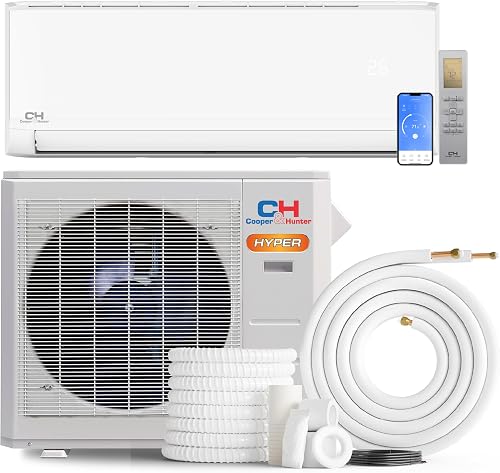
Cooper & Hunter 24000 BTU Hyper Heat
Best for severe winter zones - 9
 Best for cold-climate DIY buyersCheck it
Which mini split for heating fits each need?
Choose the Pioneer 18000 for a medium-size zone, a smaller system for a lower room load, or a Hyper Heat model when severe winter conditions drive the decision. Climate fit comes before overall score when the system will supply your main heat.
Pioneer Diamante Pro 18000: for medium-size living areas
Pioneer Diamante Pro 18000 BTU 230V: Best for medium-size living areas
- 18,000 BTU/h heating capacity
- Heating operation down to -4°F
- Recommended for 500 to 750 sq ft
- 9.5 HSPF2
A strong starting choice for a medium-size living area or addition that needs its own heat. Dual-axis airflow and remote temperature sensing help you direct comfort toward the occupied space.
Pros
- Motorized up-down and left-right louvers
- Pioneer identifies NEEP ASHP recognition for cold-climate capability
- Washable reusable filter
Cons
- Requires 230V power
- AirLink app control needs a separately sold module
The larger Pioneer suits an open living area or addition that needs independent heat without extending central ductwork. Its recommended area is 500 to 750 sq ft, subject to the room's actual heating load.
It offers 18,000 BTU/h heating capacity and operation down to -4°F. Pioneer identifies NEEP ASHP recognition for cold-climate capability, making this a useful candidate for a heating-focused installer assessment.
Motorized vertical and horizontal louvers give you control over where warm air travels. I FEEL sensing measures temperature near the remote, which is useful when the sitting area feels different from the wall near the indoor unit.
Keep that remote away from direct sun, lamps and drafts so its location reflects the space you occupy. This is a better fit for a connected room than several bedrooms behind closed doors.
Skip it if your room needs much less heat or your winter plan requires operation below its limit. Optional AirLink app control also needs a separate module.
Senville LETO: for smaller zones in milder winters
Senville LETO 12000 BTU: Best for milder winter rooms
- 12,000 BTU capacity
- Heating operation down to 5°F
- Alexa and app control
- 16 ft line set
A smaller-zone option for climates that stay within its heating range, with app control and temperature routines. Senville backs it with five-year parts and compressor coverage, excluding labor.
Pros
- Alexa and app control
- Installation kit included
- Five-year parts and compressor warranty
Cons
- Warmer heating limit than the other temperature-rated picks
- Warranty excludes labor
The Senville LETO suits a smaller occupied zone where winter temperatures stay within its 5°F heating range. It also makes sense as supplemental heat when another system covers colder periods.
Its 12,000 BTU capacity should be matched to the room rather than chosen from a floor-area estimate alone. A sunny room that needs substantial summer cooling may have a different winter heating requirement.
Alexa and app control let you adjust temperature remotely and set routines. That can help in a home office with regular hours, though a steady setting often works well during long occupied periods.
The package includes a 16 ft line set, and professional installation is required. Senville backs parts and the compressor for five years, with labor excluded.
Choose it for its controls and climate fit, rather than its place near the top of the scores. Skip it as your only heater where winter conditions regularly fall below its operating range.
Pioneer Diamante Pro 12000 230V: for smaller additions
Pioneer Diamante Pro 12000 BTU 230V: Best for smaller home additions
- 12,000 BTU/h heating capacity
- Heating operation down to -4°F
- Recommended for 350 to 500 sq ft
- 9.5 HSPF2
A smaller Pioneer for an addition or defined room with suitable 230V service. It keeps the remote temperature sensing and adjustable airflow of the larger model.
Pros
- I FEEL remote temperature sensing
- Motorized airflow in two directions
- Washable reusable filter
Cons
- Requires 230V power
- AirLink app control requires a separately sold module
This Pioneer fits a smaller addition or defined room where a load calculation supports 12,000 BTU/h of heating capacity. Pioneer recommends it for 350 to 500 sq ft, with heating operation down to -4°F.
Choose this version when the electrical plan calls for 230V service. Have the installer assess the circuit before ordering, especially if you are converting a porch or finishing a space that previously had little electrical demand.
Its 9.5 HSPF2 describes seasonal heating efficiency, while 20.0 SEER2 describes cooling efficiency. The heating figure is the more relevant starting point for a room used mainly through winter.
The remote includes I FEEL sensing, and the louvers move in both directions to help spread air through the room. A washable filter keeps routine care straightforward.
Skip this capacity if the room has a much smaller load. Moving up to the larger Pioneer is also unnecessary unless the heating calculation supports it.
DELLA Vario: for connected spare rooms
DELLA Vario 12000 BTU Pre-Charged: Best for connected spare rooms
- 12,000 BTU/h heating capacity
- Operation down to -4°F
- Alexa support
- 16.4 ft installation kit
An option for a spare room or home office where Alexa support and a timer are useful. Its remote temperature sensing applies during cooling, so that feature should not drive a heating purchase.
Pros
- Alexa support
- Auto defrost and compressor pre-heating
- 16.4 ft installation kit
Cons
- Remote temperature sensing is specified for cooling
- Professional installation and line-set vacuuming required
The DELLA Vario suits a spare room or home office where Alexa support and scheduled use matter. It offers 12,000 BTU/h heating capacity, coverage guidance up to 550 sq ft and operation down to -4°F.
Its timer, sleep mode and multiple fan speeds let you adjust operation around the room's use. Automatic defrost and compressor pre-heating are also included.
The remote temperature sensor is specified for cooling mode. Choose this model for its overall heating fit and controls, rather than expecting that sensor to manage winter comfort near your desk.
Della requires professional installation, including line-set vacuuming, despite the pre-charged system. The included kit is 16.4 ft, so have the installer measure the actual route before assuming it will reach.
Skip it if you want a quick-connect self-install system. For app setup, plan on a 2.4 GHz WiFi network, and confirm the exact matched equipment's efficiency figures because Della's published figures differ.
Pioneer Diamante Pro 12000 115V: for electrical retrofit plans
Pioneer Diamante Pro 12000 BTU 115V: Best for smaller retrofit projects
- 12,000 BTU/h heating capacity
- 115V system
- Heating operation down to -4°F
- Recommended for 350 to 500 sq ft
The smaller Pioneer to consider when a 115V installation fits the electrical plan. Have an electrician confirm circuit capacity and wiring before choosing it.
Pros
- 115V configuration
- I FEEL remote temperature sensing
- Washable reusable filter
Cons
- Existing wiring still needs assessment
- AirLink app control requires a separately sold module
This Pioneer is the smaller-zone option to consider when 115V service fits your installation plan. It shares the 230V version's stated heating capacity, recommended room range and cold-weather operating limit.
The voltage choice is an electrical decision, not a promise of easier installation. An electrician still needs to check the required circuit, wiring, protection and disconnect arrangement.
Its variable-speed compressor adjusts output with demand, while the washable filter and self-clean cycle support routine upkeep. The self-clean function does not replace filter cleaning or professional service.
Choose it for a retrofit where the circuit assessment supports this configuration and the room load fits. Its I FEEL remote can help control temperature near an occupied area when placed sensibly.
Skip it if you are choosing solely because a nearby household outlet appears convenient. Also include the separate AirLink module in your plan if app control is a requirement.
MRCOOL Easy Pro: for renovation buyers planning DIY work
MRCOOL Easy Pro 18000 BTU 230V: Best for handy renovation buyers
- 18,000 BTU capacity
- Heating and cooling
- Coverage up to 800 sq ft
- DIY installation design
An installation-focused choice for a renovation where the owner wants to take on suitable setup work. Confirm its outdoor heating range and cold-weather output before using it as the main winter heater.
Pros
- MRCOOL describes a DIY installation design
- Heating and cooling modes
- Inverter system
Cons
- Minimum outdoor heating temperature needs confirmation
- Requires 230V power
The MRCOOL Easy Pro is worth considering when taking on suitable installation work is a main project goal. MRCOOL describes a DIY installation design for this 18,000 BTU, 230V heating and cooling system.
Its area guidance reaches up to 800 sq ft, but that should not decide the size for a drafty workshop or converted garage. Doors, insulation and the amount of exposed wall can change the load substantially.
Before choosing it for winter use, obtain its minimum outdoor heating temperature and output at your local cold-weather conditions. Those details are necessary for deciding whether it can replace an existing heater.
Read the exact model's installation manual before buying tools or preparing connections. Do not assume its installation steps are identical to the MRCOOL DIY Hyper Heat model below.
Choose it when its confirmed heating performance and installation approach fit the renovation. Skip it for a primary-heating purchase until those winter details are clear.
Cooper & Hunter 24000: for large open rooms
Cooper & Hunter 24000 BTU 230V Heat Pump: Best for large open rooms
- 24,000 BTU heating and cooling
- Heating operation down to -13°F
- Smart Kit included
- 16 ft installation kit
A larger single-zone system for open rooms with a heat load that calls for this capacity. Its included Smart Kit supports smartphone control.
Pros
- 24,000 BTU heating and cooling capacity
- Smart Kit included
- 16 ft installation kit included
Cons
- Freight delivery requires access planning
- Professional installation required
The Cooper & Hunter 24000 suits a large open zone with a heating load that calls for 24,000 BTU. Its heating operating range reaches down to -13°F.
That makes it a candidate for colder conditions than the smaller standard options here. It still needs enough heating output at the temperature used to size your room.
The included Smart Kit supports smartphone control, and the package includes a 16 ft installation kit. A pre-charged outdoor unit does not change the requirement for professional installation.
Plan delivery as well as installation. This system ships by freight to the nearest accessible point outside your home, so arrange a suitable path and help moving it into position.
Skip it for a small bedroom or a house with several closed rooms that one indoor head cannot serve well. Also confirm the exact equipment's efficiency documentation, since Cooper & Hunter's published efficiency figures differ.
Cooper & Hunter Hyper Heat: for larger cold-weather zones
Cooper & Hunter 24000 BTU Hyper Heat: Best for severe winter zones
- 24,000 BTU capacity
- Heating operation down to -22°F
- Smart Kit included
- Professional installation required
A cold-weather candidate for a larger zone with a substantial heating load. Check its output at the local winter design temperature before selecting it as primary heat.
Pros
- Heating operation down to -22°F
- Smart Kit included
- 16 ft installation kit included
Cons
- Requires a licensed technician
- Large capacity may not suit smaller rooms
The Cooper & Hunter Hyper Heat is a candidate for a larger zone where severe winter temperatures shape the purchase. Its stated heating operating limit is -22°F, with 24,000 BTU capacity.
For primary heat, ask the installer to compare its cold-weather output with the room's heat loss. That comparison should also identify the outdoor temperature at which another heat source may be needed.
The included Smart Kit allows smartphone control. A 16 ft installation kit comes with the system, and a licensed technician must complete the installation.
Its 22.3 SEER2 figure describes cooling efficiency. Use heating performance documents, rather than that number, to judge winter suitability.
Freight delivery needs access planning, much like the other large Cooper & Hunter system. Skip this model if its capacity greatly exceeds the room load, even if its low operating temperature looks appealing.
MRCOOL DIY Hyper Heat: for smaller cold-climate projects
MRCOOL DIY Hyper Heat: Best for cold-climate DIY buyers
- 12,000 BTU configuration
- Quick-connect design
- Built-in WiFi
- Operation down to -22°F
A smaller cold-weather option with quick-connect installation and built-in smart controls. Confirm sizing because MRCOOL's room-area guidance varies for this configuration.
Pros
- Quick-connect installation design
- Alexa and Google Assistant compatibility
- 10 HSPF2 for the 12,000 BTU configuration
Cons
- Recommended room coverage needs confirmation
- Electrical and mounting work still require planning
The MRCOOL DIY Hyper Heat suits buyers who want a smaller cold-weather system with quick-connect installation. This configuration is 12,000 BTU, with a stated operating range reaching down to -22°F.
Its heating efficiency is 10 HSPF2, and built-in WiFi supports Alexa and Google Assistant. Keep the configuration straight when comparing models, since the separate 18,000 BTU version has different efficiency figures.
MRCOOL's room-area guidance varies for this configuration. Use the room's calculated heat loss and the exact model's heating output to settle sizing before ordering.
Quick connections reduce refrigerant connection work, but the project still includes mounting, wall penetrations, drainage and electrical planning. Confirm the connection route and required kit before preparing the site.
Choose it when those tasks fit your skills and local requirements. Skip a self-install plan if safe outdoor placement, electrical work or access to the wall location is beyond what you can arrange.
How should you size a mini split for heating?
Size it from room heat loss at local winter conditions, then check whether the selected system can deliver that much heat. Floor area helps narrow the choices, but it cannot account for the building by itself.
Start with the room's heating load
Ask for a room-by-room load calculation that includes insulation, ceiling height, windows, exterior surfaces and air leakage. Mention any planned insulation upgrades, since sealing and insulating first may change the required equipment size.
A garage door opened several times a day creates a different heating task from a sealed living room. Tell the installer how you use the space and the indoor temperature you want to maintain.
Oversizing is not a reliable shortcut. A system that cannot turn down far enough for mild weather may cycle more often, while extra capacity cannot correct poor air distribution.
Our mini split sizing and installation guide explains the planning choices that come before equipment selection.
Check where warm air can travel
One wall-mounted head works best when air can move through its assigned zone. Closed doors and narrow passages can leave nearby rooms cool even when the main room reaches its set temperature.
For a divided basement or several bedrooms, ask whether separate zones are needed. Turning the thermostat higher in the main room can overheat that space without solving the distant room's problem.
If you are still deciding how ductless heating fits your home, our mini split heat pump guide explains sizes, system types and installation basics.
Match heating output to your winter design temperature
The key number is heat delivered at the outdoor temperature used for local sizing. Ask for performance information for the exact indoor and outdoor unit combination, not a broad series description.
A minimum operating temperature marks a boundary where operation is allowed. It does not promise full rated capacity, steady efficiency or enough heat for your building at that boundary.
What winter performance matters beyond the temperature limit?
Compare cold-weather output, heating efficiency and backup needs together. A model that runs at a very low temperature can still need help if the room loses heat faster than the system supplies it.
HSPF2 describes seasonal heating efficiency under a standard procedure. It helps compare models measured on the same basis, but it does not predict your exact electric bill.
Do not treat HSPF and HSPF2 as interchangeable values. SEER2 measures cooling efficiency, so a higher SEER2 number alone is not a reason to choose a winter heater.
Defrost is another part of normal heat-pump operation. Under suitable cold, damp conditions, frost can collect outdoors and the system may briefly interrupt normal heating to clear it.
Plan backup heat when the equipment's output falls short, local conditions exceed its range or reliable heat is essential during a fault. Have the installer explain how that backup will be controlled before removing an existing heater.
What should you arrange before installation?
Arrange power, equipment placement, the connection route and drainage before the units arrive. An included installation kit covers components, but it cannot account for every building or site.
Confirm power and the connection route
Have the required circuit and electrical protection checked for the exact model. Matching voltage is only one part of the job, and existing wiring may still need changes.
Measure the full route between units, including rises, bends and wall thickness. A kit that seems long enough from a straight-line measurement may fall short once routed neatly.
For systems that require professional refrigerant work, the installer should handle connection preparation, evacuation and any charge adjustment required by the manual. Pre-charged equipment does not remove those steps.
Review whether you can install a mini split yourself before dividing the work between yourself and a contractor.
Place both units for winter use
Position the indoor head so air can move into the occupied space without a tall cabinet or doorway blocking it. Leave the required clearances and access for filter removal.
Set the outdoor unit where snow, roof runoff and falling ice will not block or damage it. Use the mounting height and support method required for the site and manual.
Allow for water released during outdoor defrost. It needs a path that will not create a recurring ice patch on a walkway or build ice around the equipment.
The indoor drain also matters during cooling and dehumidifying seasons. Plan its slope and discharge location while the wall route is being designed.
How do you use and care for a heating mini split?
Use a steady, sensible set temperature and keep airflow clear. Variable-speed systems can maintain comfort over long runs without needing repeated thermostat changes.
Start with Heat mode during the heating season. In automatic changeover mode, the system may switch between heating and cooling as indoor conditions change.
Avoid large overnight setbacks until you know how the system recovers during cold weather. A room that cools deeply can take time to warm again, especially when the heat pump is already working near its available output.
Use fan and louver settings to move warmth toward the occupied area. A very quiet fan setting may be less useful when warm air needs to reach the far end of a room.
Inspect filters regularly and clean them according to the manual, with more frequent checks in dusty spaces. Let washable filters dry as instructed before putting them back.
Keep leaves, snow and stored items away from the outdoor unit. Do not chip ice from the coil or cover a running unit to protect it from winter weather.
Arrange service if heat drops persistently, unusual noise develops or ice remains after normal defrost cycles. Repeatedly raising the thermostat will not fix blocked airflow or a system fault.
Which buying mistakes are easiest to avoid?
Avoid choosing by score, room area or a single efficiency number without checking the heating plan. Each can narrow your options, but none confirms that the room will stay warm.
- Buying extra capacity for reassurance: use a load calculation and the system's operating range instead.
- Choosing the coldest limit automatically: check heat delivered at that temperature and whether the room needs that capacity.
- Expecting one head to heat closed rooms: plan airflow and separate zones before ordering.
- Treating pre-charged as self-install: follow the exact model's connection and professional installation requirements.
- Planning around a nearby outlet: have the circuit assessed before choosing voltage.
- Ignoring service access: leave room to clean filters, reach connections and service the outdoor unit.
Request an installation scope that covers electrical work, supports, drainage, connection length and commissioning. A clear scope makes different equipment choices easier to compare.
Which mini split for heating should you choose?
Choose the Pioneer Diamante Pro 18000 BTU 230V for a medium-size open zone when the load calculation and winter output support it. Move to a smaller Pioneer, Senville or Della when the room needs less capacity.
For a larger cold-weather zone, compare the Cooper & Hunter systems by output at your local winter design temperature. For a smaller project where quick-connect installation matters, consider MRCOOL DIY Hyper Heat after confirming sizing.
Keep MRCOOL Easy Pro on the shortlist only after its winter range and heating output are confirmed. Its installation approach cannot settle whether it will cover your heating needs.
Before ordering any mini split for heating, get the room load, electrical plan and backup needs settled. Use what size mini split you need to prepare for that sizing discussion.
Our top 3 picks at a glance
-
1
Best for medium-size living areas
Pioneer Diamante Pro 18000 BTU 230V
9.0/10 our score
See it on Amazon -
2
-
3
Best for smaller home additions
Pioneer Diamante Pro 12000 BTU 230V
8.6/10 our score
See it on Amazon
Frequently asked questions
What makes a mini split good for heating?
The right heating mini split matches the room's heat loss and delivers enough heat at local winter temperatures. Compare cold-weather output, heating efficiency and minimum operating temperature, then confirm the electrical and installation requirements; a large capacity number or a very low operating limit cannot replace that sizing work.
Can a mini split heat a home in freezing weather?
Yes, a properly sized heat pump can provide heat below freezing within its operating range; whole-home heating also needs enough indoor units to reach separate rooms. Ask an installer to compare output with room-by-room heat loss and identify when backup heat will be needed during colder weather.
Is 12,000 BTU enough for heating a room?
It can be enough, but the answer depends on heat loss rather than floor area alone; insulation, ceiling height, windows, drafts and outdoor temperatures affect the load. Ask for a room-by-room calculation, especially for a garage, sunroom or addition with more exposed surfaces than a typical interior room.
Are mini splits with DIY installation suitable for heating?
Yes, installation style does not decide heating suitability; capacity and cold-weather output still need to match your room. A quick-connect system can reduce refrigerant connection work, but mounting, drainage and electrical work remain; follow the exact model's manual and local requirements before deciding which tasks you can complete yourself.
Can a mini split heat a basement or garage?
Yes, when the system is sized for that space and its winter conditions. Include uninsulated walls, slab heat loss, drafts and garage door use in the assessment; keep airflow paths clear, and choose an indoor location that serves the occupied area without directing warm air straight toward an open door.