PTAC vs Mini Split: What Is the Difference?
A PTAC is a self-contained wall unit that cools or heats one room through a sleeve in an exterior wall. A mini split splits into an indoor air handler and an outdoor condenser linked by a line set, so it runs quieter and reaches higher efficiency.
On this page (9 sections)
- What is a PTAC unit and how does it work?
- What is a mini split and how is it different?
- How do PTAC and mini split systems differ in efficiency?
- Which system is easier to install?
- Which one runs quieter in a bedroom or living room?
- Can a mini split replace a PTAC in the same wall opening?
- Which mini split fits a garage or room that needs one zone?
- How do running costs and maintenance compare?
- Which one should you choose?
A PTAC is a single boxed unit that sits in a wall sleeve and handles one room on its own. The core difference between a PTAC and a mini split is the split: a mini split puts the compressor outside and leaves only a quiet air handler indoors.
That changes how each one installs, sounds and performs. Both cool a single zone without ductwork, and the choice comes down to your building, your wall and how much efficiency you want.
The right pick depends on what already exists in the room.
What is a PTAC unit and how does it work?
A PTAC (packaged terminal air conditioner) is an all-in-one unit that fits through a wall sleeve. It pulls outside air, cools or heats it, and blows it into the room through a front grille.
The compressor, coils and fan all live in that one cabinet. That's why PTACs are the default in hotels and motels: each room gets its own unit and its own thermostat, with no shared ductwork.
Many PTACs cool with a standard refrigerant cycle and heat with electric resistance coils. Heat pump versions exist, but the classic electric-heat model keeps running in very cold weather at the cost of higher power draw.
Service is simple because everything is reachable from the room side. A technician slides the unit out of the sleeve, works on it, and slides it back.
For a building with dozens of identical rooms, that predictability is the main selling point.
What is a mini split and how is it different?
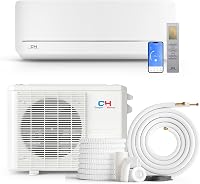
A mini split separates the system into two parts: a wall-mounted indoor air handler and an outdoor condenser connected by refrigerant lines. Only the air handler is in the room.
That split is what makes a mini split quiet. The compressor, which is the loud part, sits outside.
Indoor noise levels on good units land around 28 dB in the case of the Pioneer Diamante Pro, which is close to a whisper.
Mini splits also tend to run at higher efficiency. The Pioneer Diamante Pro carries 20.0 SEER2 and 9.5 HSPF2 ratings with R-454B refrigerant.
Those numbers usually beat a standard PTAC, which is why utilities and efficiency programs push mini splits for home upgrades.
The trade-off is installation. A mini split needs a line set run through the wall, plus power and a drain path.
That's more work than sliding a PTAC into an existing sleeve.
How do PTAC and mini split systems differ in efficiency?
Mini splits usually win on efficiency because of inverter compressors and outdoor placement. A PTAC runs a single-speed compressor in cycles; a mini split varies its output to match the load.
An inverter compressor slows down instead of switching fully off. The Pioneer Diamante Pro adjusts output as conditions change, which cuts part-load energy use.
That matters most in mild weather, when a unit runs long and light rather than hard and short.
PTACs can be efficient too, but their form limits them. Packing the whole system into one wall cabinet means less coil area and a noisier, less flexible design.
Electric resistance heat also costs more per BTU than a heat pump.
The practical result is lower bills for most mini split owners over a season. The exact gap depends on your climate, the model and how well the room is sealed.
Run a load estimate before you assume the savings.
Which system is easier to install?
A PTAC is easier if a wall sleeve already exists; a mini split is easier if you're starting from a plain wall. A sleeve needs a large opening cut through an exterior wall, which is major construction.
Mini splits need only a small hole for the line set. That's the reason so many DIY kits exist.
If you want to do the work yourself, can you install a mini split yourself walks through the electrical and refrigerant steps and where a licensed tech is still required.
Some mini splits ship with pre-charged line sets and Quick Connect fittings. That design removes vacuum pump work, which is what makes true DIY installs possible.
Our explainer on DIY mini split systems pre charged covers how that works and what's still off-limits.
Either way, the electrical circuit is the part that needs care. A 230V mini split or PTAC needs a dedicated breaker and correct wiring.
That's the one step most homeowners should hand to an electrician.
Which one runs quieter in a bedroom or living room?
A mini split is quieter in the room because the compressor is outside. The indoor unit only moves air, so its fan is the main sound source.
Mute modes and variable fan speeds let it drop lower at night.
The Pioneer Diamante Pro lists 28 dB noise, and its Mute mode helps the indoor unit run with less distraction. For a bedroom, that's a real advantage over a unit whose whole system sits in the wall.
PTACs put the compressor, fan and refrigerant cycle together in the room. You hear cycling, fan rush and the compressor kicking on.
Newer models are better than old hotel units, but the form still limits how quiet they can get.
If the room is a bedroom, office or nursery, noise usually decides the argument. For a rental unit where the unit runs hard all summer, a noisier PTAC may be an acceptable trade for easy service.
Can a mini split replace a PTAC in the same wall opening?
Not directly. A PTAC sleeve is sized for a packaged cabinet, and a mini split's indoor unit is a slim wall head fed by a line set.
You can reuse the opening in some cases, but it needs new framing, patching and a proper line-set path.
The better path is to treat the sleeve as a spot to close up. Seal the opening, then mount the mini split's indoor unit on a clear section of wall and run the line set to an outdoor condenser.
That gives you the quiet and efficiency benefits without fighting the old sleeve.
Check your building's rules first. In a condo or co-op, an outdoor condenser may need approval, and some buildings restrict visible units.
A PTAC replacement stays inside the building envelope, so it's often the only approved option there.
Which mini split fits a garage or room that needs one zone?
A single-zone mini split is the closest match to what a PTAC does. Both condition one defined space.
The mini split adds inverter efficiency and quieter operation for a room that needs year-round comfort.
The Pioneer Diamante Pro 12000 BTU 230V covers 350 to 500 sq ft and runs down to -4°F in heating. Its washable filter and self-clean cycle keep upkeep simple. {{product B0FJMXNSJF | A 12,000 BTU 230V heat pump rated to -4°F, for one room or a well-insulated garage.}}
If the space is bigger or you want the simplest install, the MRCOOL DIY Select 18000 BTU 230V covers up to 800 sq ft with a pre-charged Quick Connect line set. It's built for owner installation without a vacuum pump. {{product B0HHJNYD5H | An 18,000 BTU kit with pre-charged Quick Connect lines for a DIY install.}}
For a smaller budget, the Senville LETO 12000 BTU adds Alexa voice control and a 16 ft line set in the box. It's a solid pick when app and voice control matter more than raw coverage. {{product B00UV3LGUE | A 12,000 BTU unit with Alexa control and a 16 ft line set included.}}
For spaces like a workshop or an added room, our roundup of the best mini split for garage settings covers models rated for dustier, less insulated spaces. If you're still comparing brands overall, the best DIY mini splits list narrows the field by install type and coverage.
How do running costs and maintenance compare?
Mini splits usually cost less to run over a season and need a bit more upkeep outdoors. A PTAC costs less to buy and less to service per visit, but its electric heat and single-speed compressor use more power.
Mini split maintenance is mostly filter cleaning indoors plus keeping the outdoor condenser clear of leaves and snow. The Pioneer's self-clean cycle helps, but the washable filter still needs regular rinsing.
A blocked outdoor unit loses efficiency fast.
PTAC maintenance is simple: pull the filter from the front grille and wash it. A technician can slide the whole unit out of the sleeve for service.
In a building with many rooms, that service model is hard to beat.
Weigh the install cost against the running cost. A mini split's higher upfront work often pays back over several seasons of use.
In a rental where you don't pay the electric bill, the PTAC's cheap service visits may matter more.
Which one should you choose?
Pick a mini split for most homes, bedrooms and additions. You get quieter operation, inverter efficiency and better cold-weather heating.
That's the difference between a PTAC and mini split that matters most day to day.
Pick a PTAC when a wall sleeve already exists, when building rules block outdoor units, or when you need the fastest possible replacement in a rental or hotel-style room. In those cases the packaged design is the practical answer.
Decide by your wall first, then by noise and running cost. If the opening is already there and approved, a PTAC is the low-drama swap.
If you're starting from a plain wall and want the best comfort per dollar, a mini split is the better fit. Measure the room and check the electrical panel before either one goes in.
Frequently asked questions
Is a mini split better than a PTAC unit?
For most homes, yes. A mini split separates the noisy compressor from the room and often runs at higher efficiency.
A PTAC still wins when you need a drop-in replacement for an existing wall sleeve or the simplest possible swap.
Can a PTAC be installed without a wall sleeve?
No. A PTAC needs a sleeve set into an exterior wall, plus a matching grille on the outside.
If the room has no sleeve or opening, a mini split is usually the easier fit because it only needs a small hole for the line set.
Do mini splits heat as well as PTACs?
It depends on the model. Many mini splits are heat pumps rated for cold weather, and the Pioneer Diamante Pro is rated down to -4°F in heating.
PTACs with electric resistance heat keep working in deep cold but draw more power to do it.
How much maintenance does each system need?
Both need clean filters and a clear drain line. A mini split also has an outdoor condenser to keep free of leaves and snow.
A PTAC's filter sits behind the front grille and is easy to pull, which helps in hotel-style rooms.
Which one is quieter in a bedroom?
A mini split is quieter because the compressor sits outside. A PTAC puts the whole system in the wall, so its fan and compressor noise land in the room.
Check the decibel rating on any model before you decide.