Cooper & Hunter vs Pioneer Mini Split: Which Is Better? (November 2026)
Pick Cooper & Hunter for cold-climate heating; pick Pioneer for a standard, budget-friendly install. In this Cooper & Hunter vs Pioneer mini split comparison, your winter lows and your room size decide more than the brand name.
On this page (9 sections)
Pick Cooper & Hunter for cold-climate heating; pick Pioneer for a standard, budget-friendly install. In this Cooper & Hunter vs Pioneer mini split comparison, your winter lows and your room size decide more than the brand name.
Cooper & Hunter sells its Hyper Heat line as a cold-weather primary system. The 24,000 BTU model heats at outdoor temperatures down to -22°F and carries a 22.3 SEER2 rating.
Pioneer, by contrast, is the familiar name in the budget single-zone segment. Its units handle normal heating and cooling without the extreme-cold hardware.
If your winters drop well below freezing and you want the heat pump to carry the load, Cooper & Hunter is the stronger pick. If you live somewhere mild and want a straightforward install, Pioneer fits the bill.

Cooper & Hunter vs Pioneer mini split: the quick verdict
Cooper & Hunter wins for cold climates and large zones; Pioneer wins on simplicity and price tier. Neither brand is the better buy for every home.
The deciding factors are heating range, efficiency, capacity and installation. Cooper & Hunter leads on the first three in the model we compared.
Pioneer leads when a mild climate and a modest room make Hyper Heat overkill.
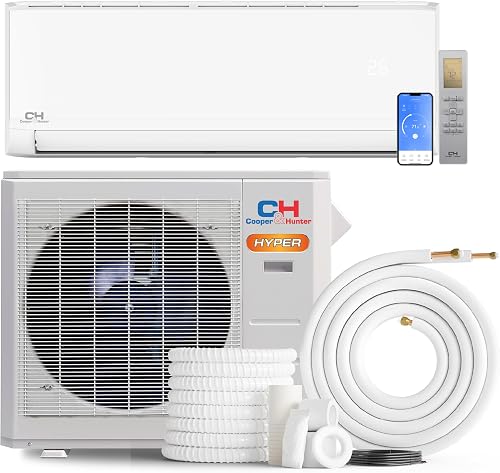
The Hyper Heat model here is the single-zone 24,000 BTU condenser with one wall-mounted indoor unit. That means one room or one open area, not a whole-house system.
The 2-ton capacity puts it in a different class from the typical 1-ton budget mini split.
Our Cooper & Hunter mini split review covers the Hyper Heat 24,000 BTU unit in more detail. Read that first if cold weather is your main concern.
The two side by side
The table below lines up the specs that change the choice. Capacity, heating range and efficiency are the numbers to weigh first.
| Product | Best for | Capacity | Efficiency | Heat range | Our score |
|---|---|---|---|---|---|
| Cooper & Hunter 24000 BTU Hyper Heat | cold winters | 24,000 BTU (2 tons) | 22.3 SEER2 | Down to -22°F | 7.0 |
| Senville LETO 12000 BTU | budget alternative | 12,000 BTU (1 ton) | 8.8 |
The Cooper & Hunter 24,000 BTU unit is a 2-ton, 230V single-zone system with a wall-mounted indoor unit and a Smart Kit for phone control. It ships with a 16 ft line set, cable and drain extension.
Cooper & Hunter says the outdoor unit comes pre-charged and the system requires a licensed technician. The condenser ships by freight and the carrier coordinates delivery to the nearest accessible point outside your home.
The comparison table pairs the Cooper & Hunter Hyper Heat with the Senville LETO as the budget reference point. That matters because Pioneer and Senville compete in the same budget tier.
The Senville LETO is a 1-ton, 12,000 BTU four-in-one unit that cools, heats, dehumidifies and fans, covers up to 700 sq ft, and runs on Alexa voice control. Its heat pump works down to 5°F.
So the matchup is clear. Cooper & Hunter is the cold-climate specialist at 2 tons.
Pioneer and Senville are the mild-weather value plays at 1 ton. The Hyper Heat condenser is a 200 lb freight item, while the Senville LETO's unit weight is about 80.7 pounds.
One is a contractor project, and the other is a lighter install with a 16 ft line set in the box.
Heating range decides the cold-climate question
Cooper & Hunter heats down to -22°F; a standard mini split like Pioneer is not built for that. This is the first spec to check before you compare anything else.
The Hyper Heat system uses an inverter compressor tuned for extreme weather. Cooper & Hunter rates it for reliable heating at ambient temperatures as low as -22°F, which covers most of the coldest US climate zones.
That makes it a candidate for primary heating, not just shoulder-season backup.
A standard Pioneer unit is designed around normal winter conditions. It heats well in mild and moderate cold, but its output falls as the outdoor temperature drops.
In a region where January nights regularly sit near zero, that gap matters more than any feature on the remote.
Check your local design temperature first. If your winter lows stay above roughly 5°F, a conventional unit does the job.
If they don't, the cold-climate hardware is the safer spend.
When Hyper Heat is worth the upgrade
Pick Hyper Heat when the mini split is your main heat source. A garage, workshop or add-on room with no ductwork is the classic case.
Cooper & Hunter lists those spaces among its intended uses, along with large bedrooms, basements and open-plan areas.
The -22°F rating means fewer backup heat strips and less reliance on a space heater. In a cold climate, that can offset part of the higher upfront cost over several winters.
The Hyper Heat name describes the hardware, not a marketing label. The inverter-driven heat pump keeps adapting output as the outdoor temperature falls.
For a mild-winter buyer, that same hardware adds cost without adding comfort. A 1-ton unit rated to 5°F covers the shoulder months and most winter days in a warm climate.
Spending more for -22°F capability you never use is the wrong trade.
Efficiency and running costs
The Cooper & Hunter unit is rated 22.3 SEER2, which is high for a 2-ton system. A higher SEER2 number means less electricity for the same cooling output.
That figure comes from the inverter compressor, which varies its speed instead of stopping and starting. Cooper & Hunter pairs the system with a 24.5 dB indoor noise rating, so it runs quietly in a bedroom or office.
Cooper & Hunter frames the inverter as the reason the unit holds a steady indoor temperature while drawing less power.
The Senville LETO's efficiency tier is lower, and its 12,000 BTU size means less total load. For a single small room in a mild climate, the smaller unit can cost less to run simply because it moves less air.
Compare the SEER2 rating for the exact Pioneer model you're considering against the 22.3 figure. A 2-ton unit that runs at a lower SEER2 will cost more per cooling hour than the Hyper Heat at the same load.
Check the rating on the nameplate before you sign for the install.
Inverter behavior in real rooms
An inverter compressor like the one in the Hyper Heat ramps up on a hot afternoon and then eases back once the room hits setpoint. That matters in a large open area, where a fixed-speed unit would cycle on and off and leave warm spots between runs.
A standard unit in a small bedroom still reaches setpoint quickly. The cycling is less of a comfort problem when the room is compact.
This is another reason capacity and climate outrank the compressor type for a budget buyer.
Capacity and room size
The 2-ton Cooper & Hunter suits large zones; a 1-ton unit fits a single room. Matching capacity to the space is the second decision after climate.
The Hyper Heat 24,000 BTU model delivers 24,000 BTU of cooling and heating. Cooper & Hunter points it at large bedrooms, garages, basements, offices, workshops and open-concept areas.
A 2-ton system in a small bedroom will short-cycle and feel clammy, so size matters.
The Senville LETO's 12,000 BTU output covers up to 700 sq ft. That's a living room, a large primary bedroom or a converted garage bay.
For anything bigger, step up in capacity rather than adding a second unit in the same zone. The Cooper & Hunter unit's 2-ton capacity covers roughly double that floor area, which is why it reads as a whole-zone system rather than a single-room add-on.
Our guide to mini split vs central air helps when the whole house needs conditioning. A single-zone mini split is the better fit for one room or an add-on space.
Sizing rule of thumb
Start with square footage, then adjust for insulation, ceiling height and window area. A well-sealed 500 sq ft room may need less than a drafty 400 sq ft one.
Have a contractor run the load calculation before ordering either brand.
Window area adds solar gain in summer and heat loss in winter, so a sunroom needs more capacity than its square footage suggests. Ceiling height matters in converted lofts and open-plan rooms, where the volume of air to condition is larger than the floor plan implies.
A 2-ton unit that looks oversized on paper can be right for a vaulted space.
Installation and DIY reality
Neither brand is a true DIY install; both need a licensed technician for refrigerant work. The difference is in what comes in the box and how the unit ships.
Cooper & Hunter includes a Smart Kit and a 16 ft installation kit. The outdoor condenser arrives pre-charged.
Cooper & Hunter also warns that the unit is not a DIY system and ships by freight because of its size and weight. Its dimensions of 48 x 40 x 40 inches and 200 lb weight tell you the condenser arrives on a pallet, not by parcel courier.
Pioneer units are sold through HVAC channels and also require professional install. Some Pioneer listings market DIY-friendly kits with pre-charged line sets, but refrigerant handling and electrical work still call for a licensed tech in most jurisdictions.
If you want the closest thing to a plug-and-play mini split, our MRCOOL vs Pioneer mini split comparison covers the DIY-friendly line. MRCOOL's pre-charged DIY series is the name to know there.
What to budget for install
Plan for an HVAC contractor, an electrical connection and a mounting location. A 230V unit like the Cooper & Hunter needs a dedicated circuit.
Factor those costs into the total before you compare sticker prices. Freight delivery also means you should confirm the site can receive a pallet and move the condenser to its pad.
Control features and daily use
The Cooper & Hunter Hyper Heat includes app and voice control through its Smart Kit. It lists WiFi, a remote and voice control among its methods.
Its operating modes cover cooling and heating, with variable fan speeds and a silent mode.
Its indoor unit runs at 24.5 dB, among the quietest in its class. That combination suits a bedroom or a home office where noise matters.
For a garage or workshop, the quiet rating is a nice extra rather than a reason to buy.
The Senville LETO offers Alexa voice control and app scheduling. Its four-in-one design adds a dehumidifier mode and a turbo function.
For a room that gets humid in summer, the dehumidifier mode is a genuine extra. Turbo is useful when you want quick cooling after the room has sat closed all day.
Neither feature list is decisive on its own. Pick the unit whose modes match how you'll use the room.
A dehumidifier mode matters more in a damp basement than a dry bedroom. A 24.5 dB noise rating matters more in a nursery than a workshop.
Who should buy which
Buy Cooper & Hunter if your winters are severe and the mini split is your main heat. Buy Pioneer if your climate is mild and you want a simple single-zone install.
Choose the Cooper & Hunter Hyper Heat 24,000 BTU when:
- Winter temperatures drop well below freezing, down to around -22°F.
- You need a primary heat source for a garage, workshop or large open room.
- You want a quiet 24.5 dB indoor unit and a high 22.3 SEER2 rating.
- You have a contractor lined up and space for a freight delivery.
Choose a Pioneer unit when:
- Your winter lows stay mild enough that a standard heat pump covers the load.
- You want a 1-ton single-zone system for a room up to about 700 sq ft.
- You're comparing budget-tier units and want the simplest path to a professional install.
If you're still weighing brands in the budget tier, our Senville vs Pioneer mini split comparison lines up two close rivals. The Senville LETO's four-in-one feature set is a real benchmark at that size.
Read it before you settle on a 1-ton unit.
The verdict
Cooper & Hunter wins this comparison for most cold-climate buyers; Pioneer is the better fit for mild winters and smaller rooms. The Cooper & Hunter vs Pioneer mini split question comes down to your design temperature and the square footage you need to condition.
The Hyper Heat 24,000 BTU model is the stronger overall pick when heating is the priority. Its -22°F rating, 22.3 SEER2 efficiency and 24.5 dB noise level make it a serious primary system for a large zone.
That's why it's the top pick in this matchup.
Pioneer remains the sensible choice for a single room in a mild climate. If your winters rarely push a heat pump to its limit, the extra cold-weather hardware adds cost without adding much comfort.
A 1-ton unit in a 400 sq ft room will do the job for a smaller upfront spend.
Check your local winter lows and room size, then choose the brand that matches. For most readers facing real cold, that's Cooper & Hunter.
Frequently asked questions
Is Cooper & Hunter better than Pioneer for cold climates?
Cooper & Hunter's Hyper Heat line is built for it. The 24,000 BTU model heats at outdoor temperatures as low as -22°F, which is well beyond the range of a standard mini split.
If your winters stay mild, a conventional unit like Pioneer is the simpler buy.
Can I install a Cooper & Hunter or Pioneer mini split myself?
No. Cooper & Hunter states that its Hyper Heat system is not a DIY product and requires a licensed technician.
Pioneer units also call for professional refrigerant work.
Plan for an HVAC contractor either way.
How many BTUs do I need for one room?
A 12,000 BTU unit suits a single room up to roughly 700 square feet, while a 24,000 BTU system handles larger open areas. Insulation, ceiling height and window area change the real number, so have a contractor size it before you order.
Does a Hyper Heat mini split cost more to run?
Efficiency ratings set the baseline. The Cooper & Hunter 24,000 BTU unit is rated 22.3 SEER2, which is strong for a 2-ton system.
Actual bills depend on your climate, electric rate and how often the unit runs.