How Long Do Mini Splits Last?
About 15 to 20 years is a useful guide to how long mini splits last. Installation, sizing, climate, maintenance, and repair history all affect when replacement makes sense.
On this page (8 sections)
- How long do mini splits last?
- What affects mini split lifespan?
- Which installation choices help prevent early problems?
- What routine care can help a mini split last longer?
- When should you repair or replace a mini split?
- Which mini splits might suit a replacement?
- What mistakes should you avoid with an aging system?
- How should you decide how long to keep your mini split?
Mini splits often last about 15 to 20 years, with installation, climate, use, and care affecting their working life. If you're asking how long mini splits last before buying or replacing one, use that range for planning and judge an existing system by its condition.
The best way to protect that investment starts before installation: choose the right capacity, arrange service access, and confirm who will maintain it.
How long do mini splits last?
Around 15 to 20 years is a useful planning range, not an expiration date. Some systems need major repairs sooner, while others remain useful beyond it.
A mini split includes an indoor air handler, outdoor condenser, controls, and connecting lines. A failed drain pump or control board doesn't automatically mean every part needs replacement.
Warranty length and service life are different. Coverage may help with certain failures during a set period, but it doesn't promise trouble-free operation or cover every expense.
Before buying, ask about parts, compressor, and labor coverage separately. Keep the installation invoice, model details, and any registration confirmation with your service records.
What affects mini split lifespan?
Sizing, installation, airflow, and operating conditions shape how well a system ages. Maintenance helps, but it can't correct every problem caused by a poor installation.
An oversized unit may cycle more often than needed and remove less moisture. An undersized unit may struggle during peak weather, so start with what size mini split you need rather than choosing extra capacity for reassurance.
Floor area alone isn't enough to size a system. Ceiling height, insulation, windows, sun exposure, air leaks, and local weather all affect the load.
Outdoor placement matters, too. The condenser needs the manual's clearances, a stable mounting surface, and room for a technician to reach service connections.
Coastal salt, blowing dust, and snow exposure can increase care needs. Review how mini splits work in cold weather if heating is a main job, and match the system to your winter conditions.
How long do mini splits last with year-round use?
Year-round heating and cooling adds operating hours, but hours alone don't predict a replacement date. A well-matched system running steadily may serve the room better than one that frequently starts and stops.
Don't assume long run times always mean a fault. Inverter systems can adjust output and run for extended periods, especially during demanding weather.
Look for changes instead: longer operation than usual in similar weather, weaker airflow, or trouble holding the same temperature. Those changes give a technician more useful clues than run time by itself.
Which installation choices help prevent early problems?
Correct line connections, drainage, electrical work, and placement help prevent avoidable repairs. An included installation kit doesn't make every system suitable for self-installation.
Ask the installer to confirm the load calculation, electrical requirements, line route, and drain route before work begins. Also confirm whether the included line set reaches without forcing an awkward equipment location.
Refrigerant connections need proper preparation and checks for leaks. A factory-charged condenser doesn't remove the need to follow the installation procedure for the complete system.
Have the installer show you the filters, shutoff, controls, and drain outlet. Request the required startup records and confirm any warranty registration deadline before the job is closed.
If you're considering doing part of the work, read whether you can install a mini split yourself first. Separate mounting and preparation tasks from work that requires HVAC or electrical qualifications.
What routine care can help a mini split last longer?
Keep airflow open and follow the manual's cleaning schedule. Start with frequent filter checks, then adjust the interval to how quickly dust builds up in your home.
Pets, workshops, and heavy use can mean more frequent cleaning. For washable filters, follow the cleaning method and let them dry fully before reinstalling them.
Keep furniture and curtains away from the indoor unit's inlet and outlet. Outside, remove loose leaves and vegetation without bending fins or pushing debris deeper into the coil.
Arrange professional service at the interval recommended for your system and conditions. Coils, drainage, electrical connections, and operating faults need attention beyond routine filter care.
Avoid aggressive spray, pressure washers, or cleaners the manual doesn't approve. A self-clean mode can support upkeep, but it doesn't replace filter cleaning or professional service.
Can condensate problems cause damage?
Blocked drainage can cause leaks and damage nearby walls or finishes. Address water dripping from the indoor unit promptly rather than treating it as normal cooling behavior.
A gravity drain needs a suitable route; some installations need a pump instead. Our guide to mini split condensate pumps explains when that extra component may be needed.
If water reaches electrical parts, don't touch wet equipment or controls. Stop operation safely and arrange service.
When should you repair or replace a mini split?
Repair an isolated fault when the rest of the system remains dependable. Consider replacement when major problems recur, parts become scarce, or the equipment no longer fits the room's needs.
Ask for a written diagnosis that names the failed component and explains the cause. A repair should address the source of the problem, such as a leak, rather than repeatedly treating its symptoms.
Compare the repair estimate with a complete replacement quote. Include removal, electrical changes, drainage work, mounting, installation, and any necessary repairs to wall openings.
Check the condition of the whole system before approving a large repair. Replacing one costly component is less appealing if other major components also need work.
Don't buy a new unit solely because an old one reaches a certain birthday. A dependable system with a manageable fault can still be worth keeping.
For replacement planning, review mini split heat pump sizes, brands, and installation basics. Ask whether existing lines and other components can be reused safely and meet the new system's requirements.
Which mini splits might suit a replacement?
Choose by room load, winter needs, and installation requirements first. These 3 systems suit different buyers, but their features don't tell you which will last longest.
Senville LETO for app control and clear parts coverage
The Senville LETO 12000 BTU suits a correctly sized room where you want Alexa or app control. Its included 16 ft line set gives you a starting point for planning the connection route.
Senville backs the system with 5-year parts replacement and compressor coverage, excluding labor. Budget for professional installation, which Senville requires, and ask who would handle a future warranty repair.
Skip it if your heating plan depends on operation below its stated 5°F limit. Also choose another capacity if the room's calculated load falls outside what this system can serve.
Pioneer Diamante Pro for colder conditions and easy filter care
The Pioneer Diamante Pro 12000 BTU 230V suits a room within Pioneer's recommended 350 to 500 sq ft range, subject to a load calculation. Pioneer specifies heating operation down to -4°F, giving it a lower stated operating limit than the other examples here.
Its washable filter and self-clean cycle make routine upkeep easier to plan. Motorized louvers and the remote's I FEEL temperature sensing suit buyers who want more control over airflow and comfort near their seating area.
Skip it if you need app control included: Pioneer AirLink requires a separately sold module. For primary winter heating, ask for output at your local design temperature because a low operating limit doesn't mean full heating capacity at that temperature.
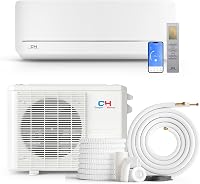
Cooper & Hunter for a larger single zone
The Cooper & Hunter 18000 BTU 230V suits a space whose calculated load calls for more capacity than the smaller systems above. Its included Smart Kit suits buyers who want phone control without adding a separate app module.
Professional installation is required, and Cooper & Hunter calls for registration within 60 days of installation. Arrange help for moving the equipment after freight delivery, which goes to the nearest accessible point outside the home.
Skip it for a smaller room that doesn't need this output. It also has a stated heating limit of 5°F, so colder locations need a heating plan that accounts for that limit.
What mistakes should you avoid with an aging system?
Don't ignore recurring faults or assume every comfort problem means replacement. Dirty filters, blocked drainage, room changes, and equipment failures need different solutions.
Keep a short record of cleaning, service calls, error codes, and changes in comfort. Note the weather and operating mode when a problem appears, especially if it happens only during heating or cooling.
Avoid repeatedly resetting a fault without finding its cause. New noises, persistent ice, weaker airflow, or a burning smell deserve attention; stop using the system if you suspect an electrical problem.
Don't treat refrigerant as a routine top-up item. If a technician finds a low charge, ask how the cause will be identified and corrected.
How should you decide how long to keep your mini split?
Keep a dependable system when repairs remain manageable; replace one with repeated major faults or a poor fit for the space. How long mini splits last in your home depends on those practical facts more than a calendar target.
Choose Senville for its controls and stated parts coverage, Pioneer for its lower heating operating limit and care features, or Cooper & Hunter when the room needs greater capacity. Confirm local service support before committing to any of them.
Before ordering, revisit mini split sizing and installation basics with your installer. Get the room load, full installation scope, warranty steps, and maintenance plan settled together.
Frequently asked questions
How long do mini splits usually last?
Mini splits often last about 15 to 20 years, though that range is a planning guide rather than a replacement deadline. Installation quality, climate, maintenance, and use affect service life; judge an older system by its comfort, repair history, and parts availability, rather than replacing it on age alone.
What makes a mini split wear out faster?
Poor installation, restricted airflow, neglected cleaning, and unresolved faults can shorten a mini split's useful life. Incorrect sizing can also affect operation and comfort; follow the manual's maintenance schedule, keep outdoor clearances open, and arrange service when performance changes instead of repeatedly resetting a fault.
Should I repair or replace an old mini split?
Repair can make sense when the fault is isolated, parts are available, and the system otherwise serves the room well. Replacement becomes more attractive with repeated major repairs, poor comfort, or scarce parts; compare a written repair estimate with a complete replacement quote that includes installation and electrical work.
Does a mini split need yearly maintenance?
An annual professional service visit is a useful starting point, but follow your model's maintenance schedule and installer advice. Filter checks usually need attention between visits, especially with frequent use, pets, or dust; professional service should address coils, drainage, connections, and operating problems that filter cleaning alone won't resolve.